Run your clinical programs and keep your clinicians.
A short, private check-in your clinicians and adult clients can use alongside the therapy you already offer, DBT among them. For DBT programs, a digital diary card with a one-page weekly summary clients bring to session. For you, a team trend you can read.
- 2Peer-reviewed papers in 2026, from IRB-approved studies
- 3 minA private check-in on any phone or laptop
- DBTDiary card in use in an adult DBT program
- Care staffCheck-ins with care staff at a skilled nursing facility
Research and clinical settingsJMIR Formative ResearchACM IUI 2026Meadows Center
Session-ready: the week on one page
Most programs still run on paper diary cards, often filled in just before session, and offer nothing for the clinicians themselves. The work between sessions decides how much the next one can do: the practice, the writing, the reflection. Clients can do a short check-in with Sanora when they choose, so the next session starts on real work. In DBT programs, clients also log emotions, target behaviors, DBT skills and the PLEASE factors on their phone, on the day it happens. Target behaviors stay on the card, so clients do not re-enter them. The open boxes hold as much as a client wants to write, in the moment, which gives the session a head start on the chain analysis. At the end of the week, Okaya builds a one-page summary. The client decides whether to print it and bring it to session, or send it to you securely.
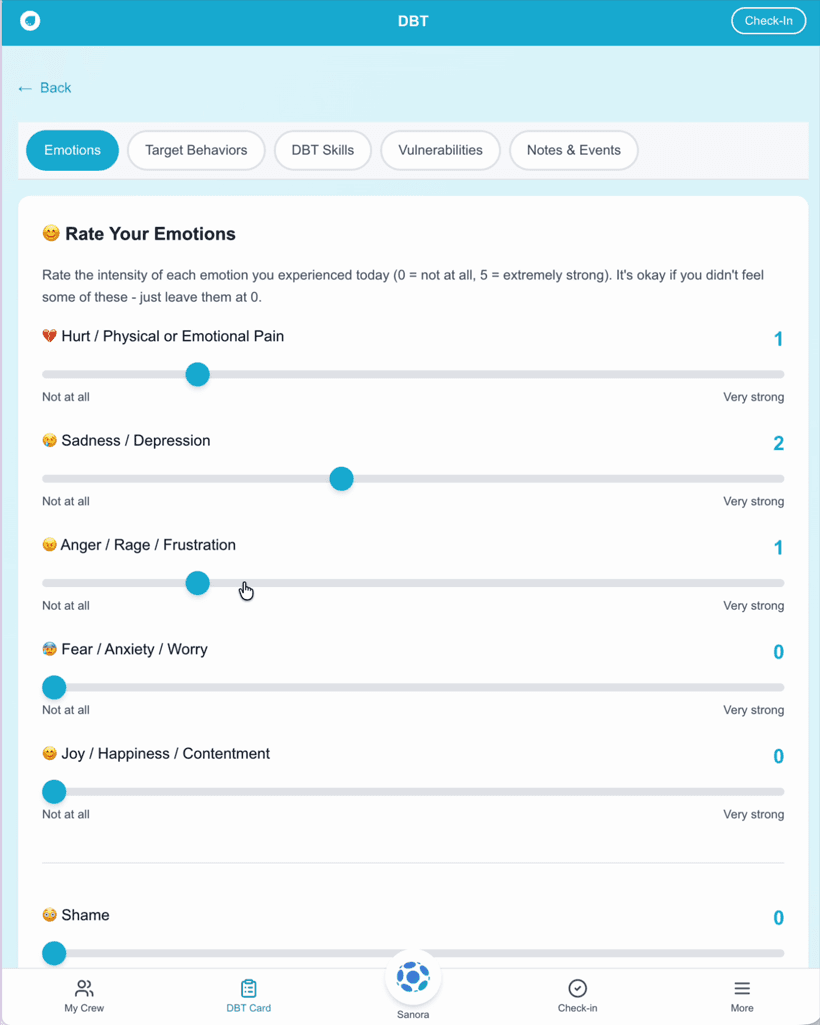
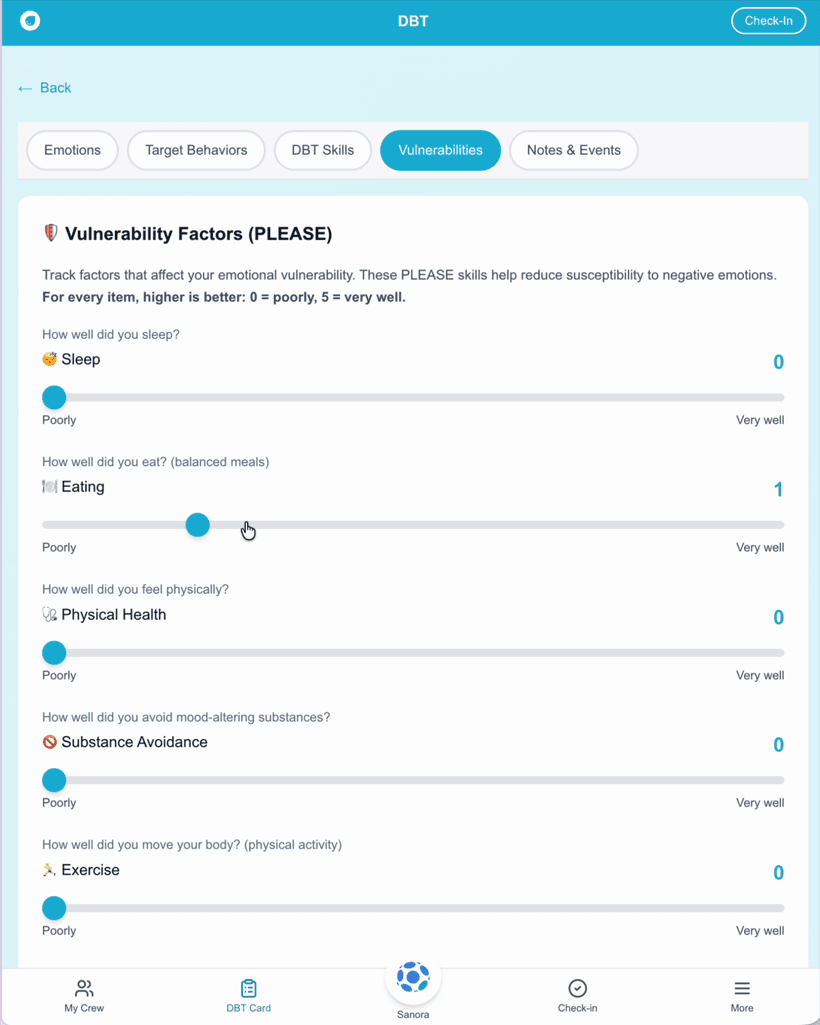
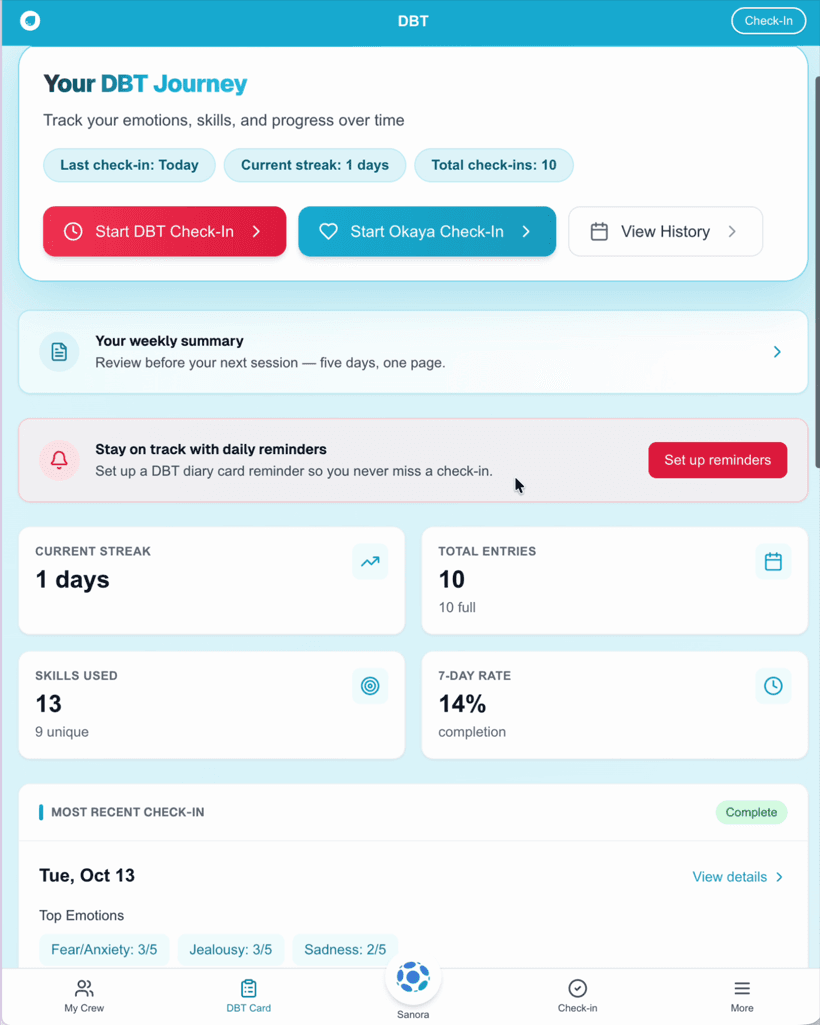
Sample data.
Want Okaya for your clients? We set it up with your team on a short call.
Talk to usWorks with the program you run
Clinics run many approaches: DBT, CBT-based programs and other evidence-based work. The check-in fits any of them, for clinicians and for clients. The diary card is built for DBT programs.
We work with each clinic to fit Okaya into how it already runs its programs.
Capacity: see how your team is holding up
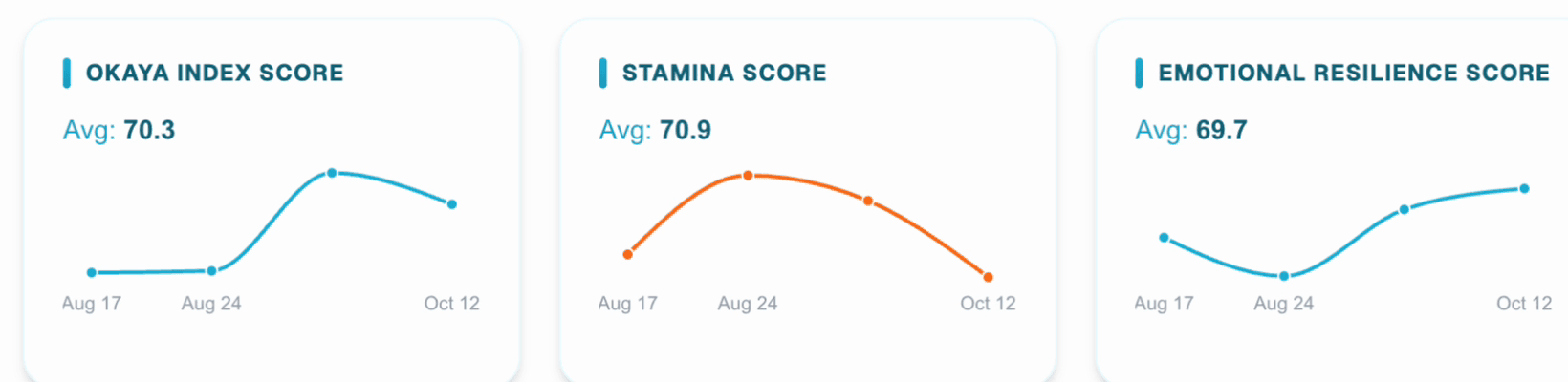
Each clinician has a short, private check-in: about 3 minutes talking with Sanora, Okaya's AI guide. Okaya compares how they sound, what they say and how their expression moves today with their own earlier check-ins. You see the team trend for readiness, stamina and emotional resilience, week by week. Who sees what.
34%
Conversation starters
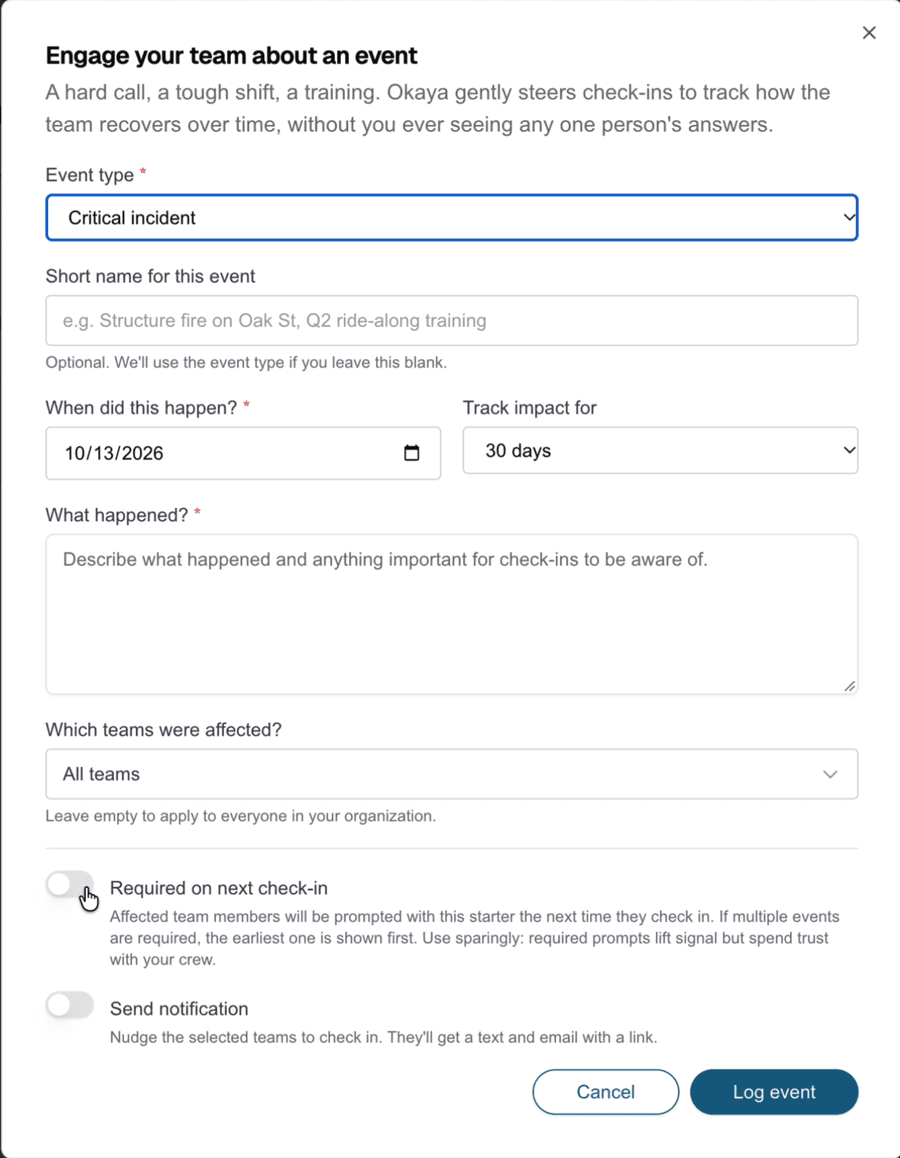
After a hard week, a difficult case or a training, you send a starter. Each clinician talks it through privately with Sanora. You see how the team comes through over time, never one person's answers.
Resources
Clinicians open support resources from the app whenever they need them.
The week, written down
The diary card is digital. When a client brings the weekly summary, the week is ready before the session starts.
Who sees what
Your clients
Clients choose to use Okaya. It sits outside treatment.
- The client sees
- Their own diary card, check-ins and weekly summary.
- Their therapist sees
- The weekly summary, only when the client brings it to session or sends it securely.
- You see
- How your DBT program is used and trending, in totals. Never one client's card or check-in.
Not part of the clinical record. No data moves between Okaya and your EHR.
Your clinicians
Clinicians use Okaya for themselves.
- The clinician sees
- Their own results.
- You see
- The team trend only, and only when the minimum number of people are in your group. Never one clinician's results or starter answers.
Never used for staffing, discipline or fitness-for-duty decisions.
For everyone
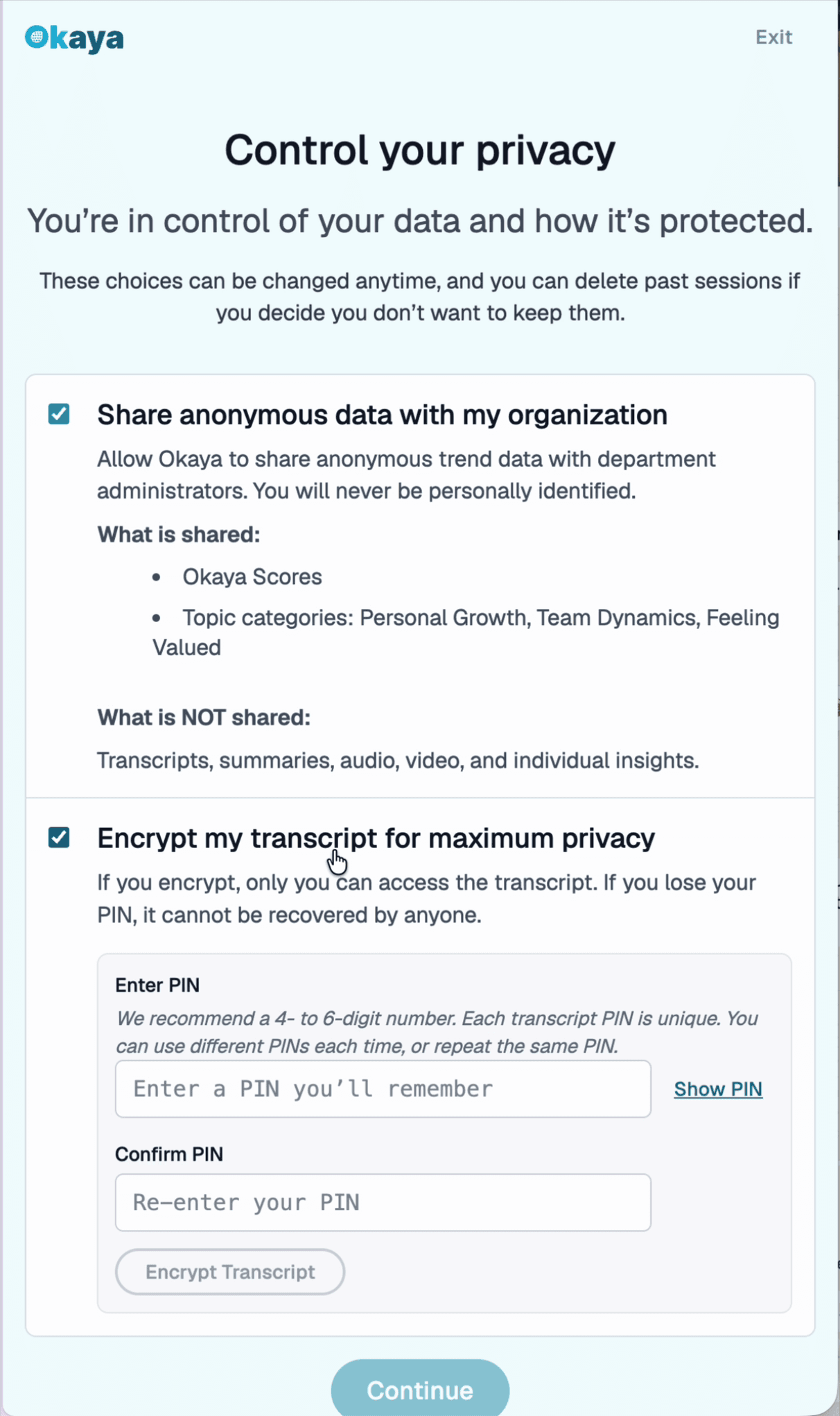
- The video stays on the phone. The phone extracts the facial landmarks. The landmarks and the voice audio go to the server, where the analysis runs.
- Okaya never identifies anyone from their face. There is no facial recognition.
- Okaya is for adults 18 and over.
What Okaya is not
- Not a medical device. It does not diagnose or treat, and it sits outside treatment.
- Not a crisis service. Okaya does not monitor clients and does not alert your clinic. Your crisis protocol stays as it is.
For the practice owner
- One monthly line. One invoice to the practice, with clinician seats included. Budget it like the rest of your practice overhead.
- Support outside the session. Offer clients a tool to use between sessions, alongside the care your practice already gives.
- Nothing to install. Clinicians and clients use their own phone or laptop. We set up the client program with your team on a short call.
Pricing
$99 a month for the first clinician, $49 for each one after, and never more than $349 a month for up to 15 clinicians. Enterprise pricing is custom.
$197 a month3 clinicians: $99 for the first, plus $49 for each of the other 2.
More than 15 clinicians, or more than one site? Enterprise pricing is custom.
See every price
| Clinicians | Per month |
|---|---|
| 1 | $99 |
| 2 | $148 |
| 3 | $197 |
| 4 | $246 |
| 5 | $295 |
| 6 | $344 |
| 7 | $349 |
| 8 | $349 |
| 9 | $349 |
| 10 | $349 |
| 11 | $349 |
| 12 | $349 |
| 13 | $349 |
| 14 | $349 |
| 15 | $349 |
Every plan starts with a 30-day free trial. Then pick the plan that fits.
Every plan includes the DBT module for your practice: DBT trend reporting for your program and DBT conversation starters.
Each client who chooses the diary card pays for their own account, directly to Okaya, never through your practice: $5 a month while they are in your program, then $11.99 a month once they leave it.
Start with your clinicians
Start with your clinicians today. No credit card needed.
Start freeIn short
- For clients: a short, private check-in for the time between sessions, with any clinical approach. DBT clients also get a diary card on their phone and a one-page weekly summary to bring to session. Clients choose to use it, and it sits outside treatment.
- For clinicians: a short, private check-in, about 3 minutes talking with Sanora, plus conversation starters and resources.
- For you: the team trend, only when the minimum number of people are in your group, so you know when to send a starter or ease the load.
Questions
We are not a DBT clinic. Does Okaya fit?
Yes. The check-in works alongside many clinical approaches, DBT among them, for clinicians and for clients. The diary card is the one part built for DBT programs.
Does Okaya touch our clinical records?
Okaya is voluntary for clients and sits outside treatment. It is not part of the clinical record, and no data moves between Okaya and your EHR. The video stays on the phone. The phone extracts the facial landmarks. The landmarks and the voice audio go to the server, where the analysis runs.
What happens if a client is in crisis?
Okaya does not monitor clients and does not alert your clinic. If a client rates a high urge, Okaya shows them their own safety plan and crisis lines. Your crisis protocol stays as it is.
Can the clinic see a client's diary card or check-ins?
No. Your clients' check-ins and diary cards belong to them. You see how your DBT program is used and trending, in totals, never one client's card or check-in. Their therapist sees the weekly summary only when the client brings it to session or sends it securely.
We are a small practice. Does it still work?
Yes. Each clinician gets their own check-ins, starters and resources. The team trend appears only when the minimum number of people are in your group.
How should clinicians introduce the diary card?
In a session. Set up the account with the client, then walk through each box: why it is there and how it helps the session and the chain analysis. A link sent on its own does much less.
How much work is it for our clinicians?
More at the start: setting up each client's account and helping clients who are less used to apps. After that, the client's week arrives already written down, so the session can start from it.
What is a conversation starter?
A short topic you send after a hard week, a difficult case or a training. Each clinician talks it through privately with Sanora at their next check-in. You see the team trend, never one person's answers.
Is Okaya a medical device?
No. Okaya is not a medical device. It does not diagnose or treat, and it sits outside treatment.
Who can use Okaya?
Okaya is for adults 18 and over.
Who pays for client use?
Your plan includes the DBT module for your practice, with DBT trend reporting for your program. Each client who chooses the diary card pays for their own account, directly to Okaya: $5 a month while they are in your program, then $11.99 a month once they leave it. Okaya never bills clients through your practice.
How do we start?
Select Start free to begin your 30-day free trial, then invite your clinicians with your group link. Pick the plan that fits when the trial ends. Talk to us when you want Okaya for your clients.
Sharing this with your team? Send clinicians okaya.me/clinicians: what a check-in is, and what stays theirs. For adult DBT clients, send okaya.me/dbt-diary-card: what the diary card and the weekly summary do for them.
Start with your team this week
Set up your practice in a few minutes. Talk to us when you want Okaya for your clients.