See how your team comes through the hard weeks of the season.
Send a check-in topic before a road trip, during exam week or after a hard loss. Each athlete checks in privately in about 3 minutes. Your performance staff see how the group is doing after it. Okaya adds what load and recovery data miss: how athletes say they are doing, in their own words.
Want to see it first? Try a check-in yourself, free.
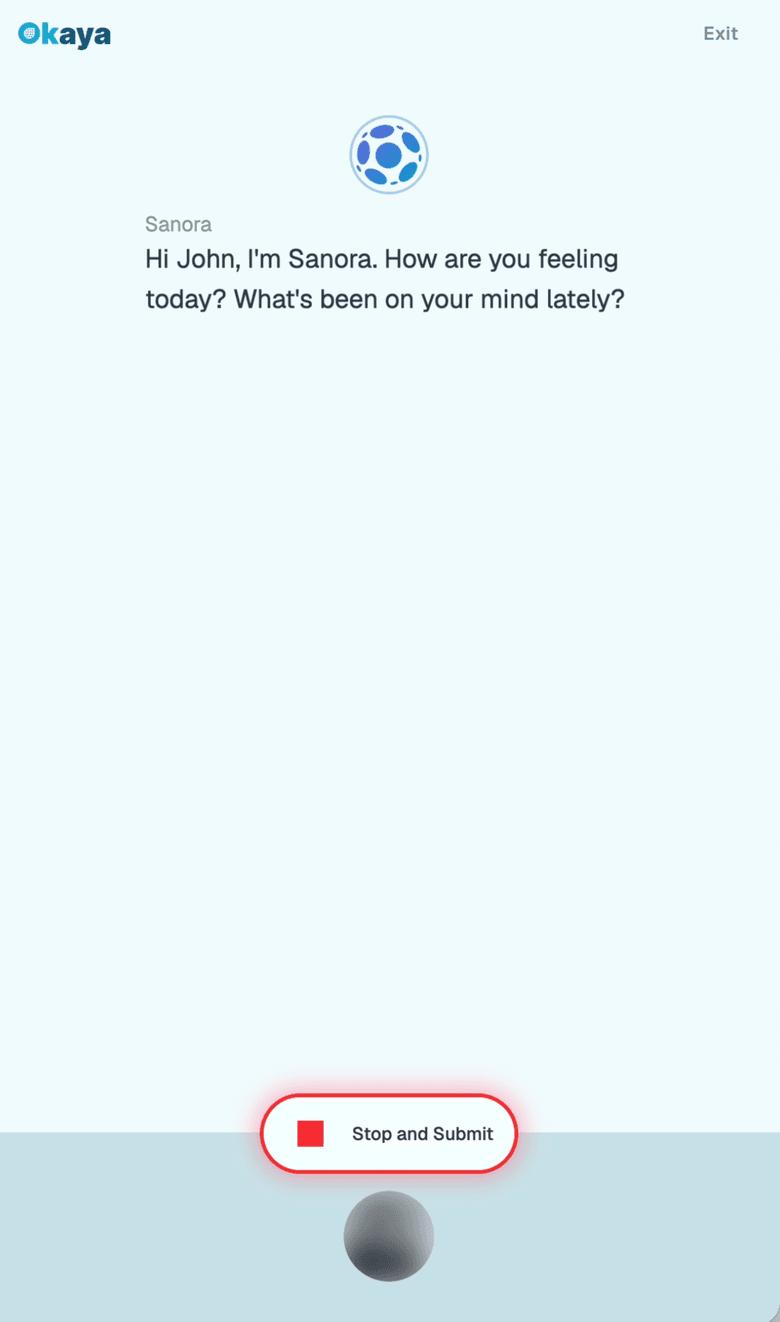
- 3 minA private check-in on any phone or laptop
- 2Peer-reviewed papers in 2026, from IRB-approved studies
- Phase IIU.S. Air Force SBIR contract
- 3-monthU.S. Space Force squadron readiness trial
Research and contracts withU.S. Air ForceU.S. Space ForceJMIR Formative ResearchACM IUI 2026
How it works
You plan check-in topics around the calendar you already run, and athletes check in on their own time.
Plan around the season
Pick the weeks that matter, such as preseason camp, the first road trip, exam week and the stretch before the postseason.
Athletes check in privately
Each athlete does a short, private check-in. They talk with Sanora for about 3 minutes on their own phone or laptop. Okaya looks at how they sound, what they say and how their expression moves, using points from the face, not a video of them. It compares today with their own earlier check-ins.
Send a topic when it matters
You send the topic to the whole roster on the day you planned, or the day after a hard loss. Okaya offers it in each athlete's next check-in.
See how the group is doing
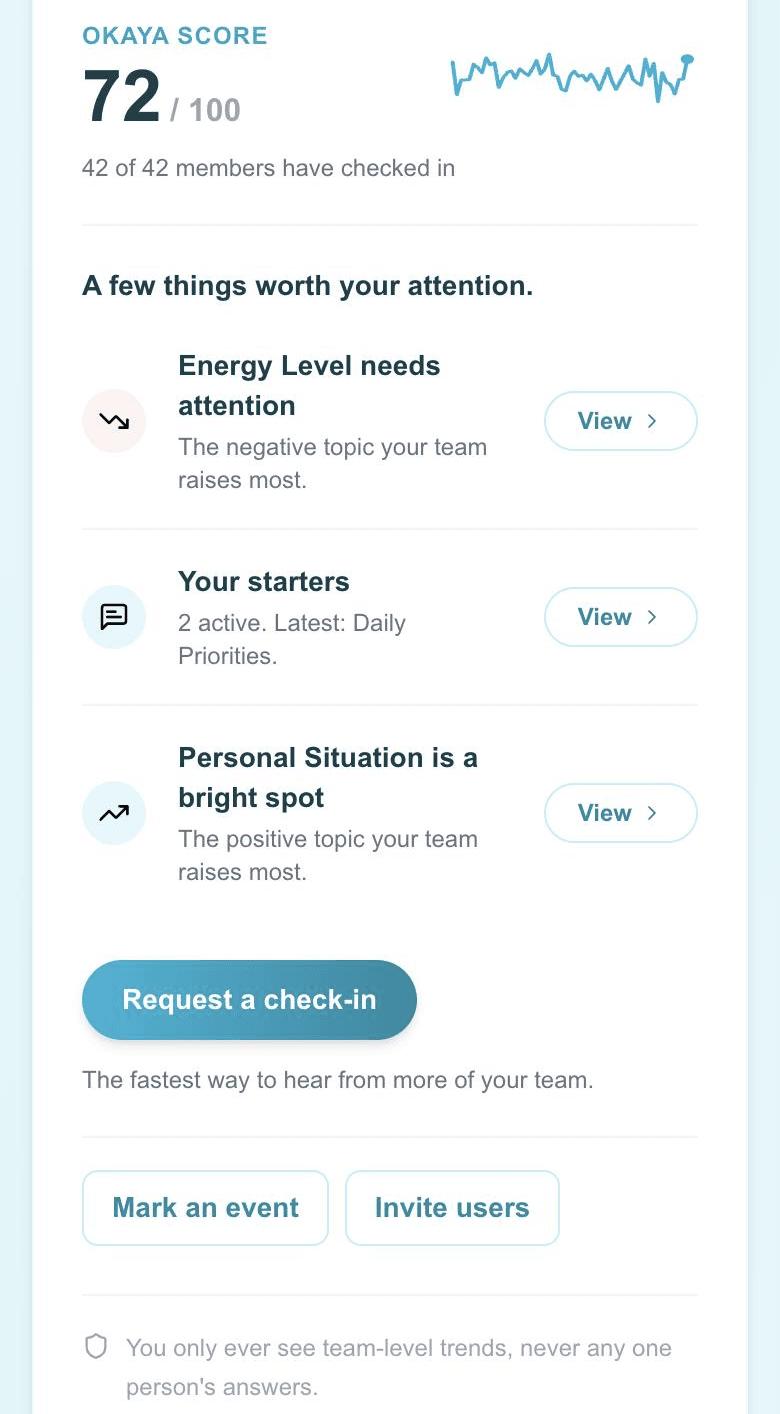
Once enough athletes have checked in, your staff see the group's readiness for that week or that event.
What the group view shows
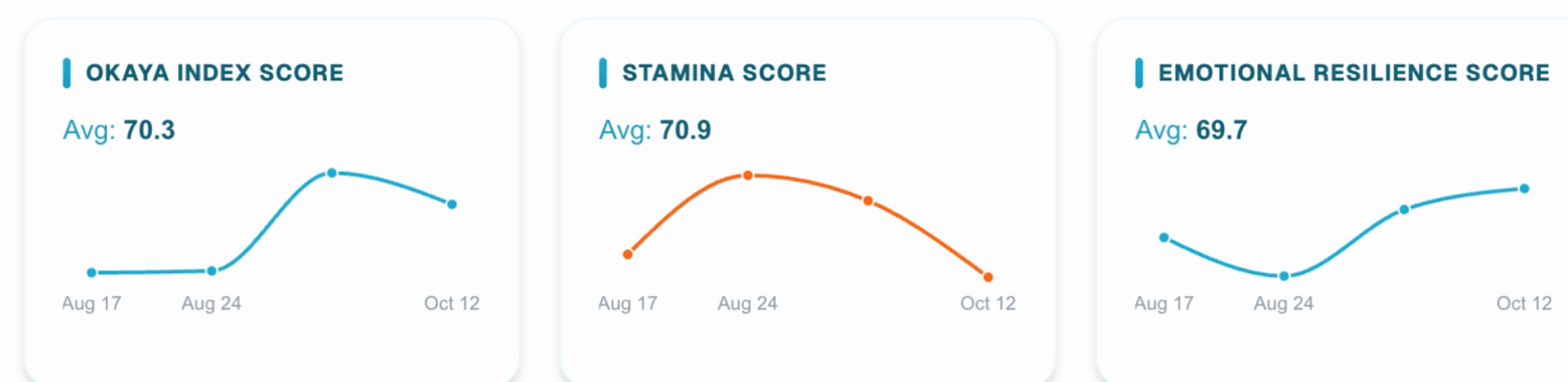
Week by week, the group view shows the group's readiness, stamina and emotional resilience, the topics the group raises most, and how the group is doing after each event you marked. It shows the group, never one athlete.
Institutional knowledge
Every event you mark keeps its date, what happened and the group's readiness after it. When athletes graduate or staff change, next season starts from what this one learned.
Who sees what
Athletes tell a check-in the truth only when no coach can see them one by one. That trust is what makes the group view worth reading.
Each athlete sees
Your result is yours: you see your own score.
Individual results stay private to the individual.
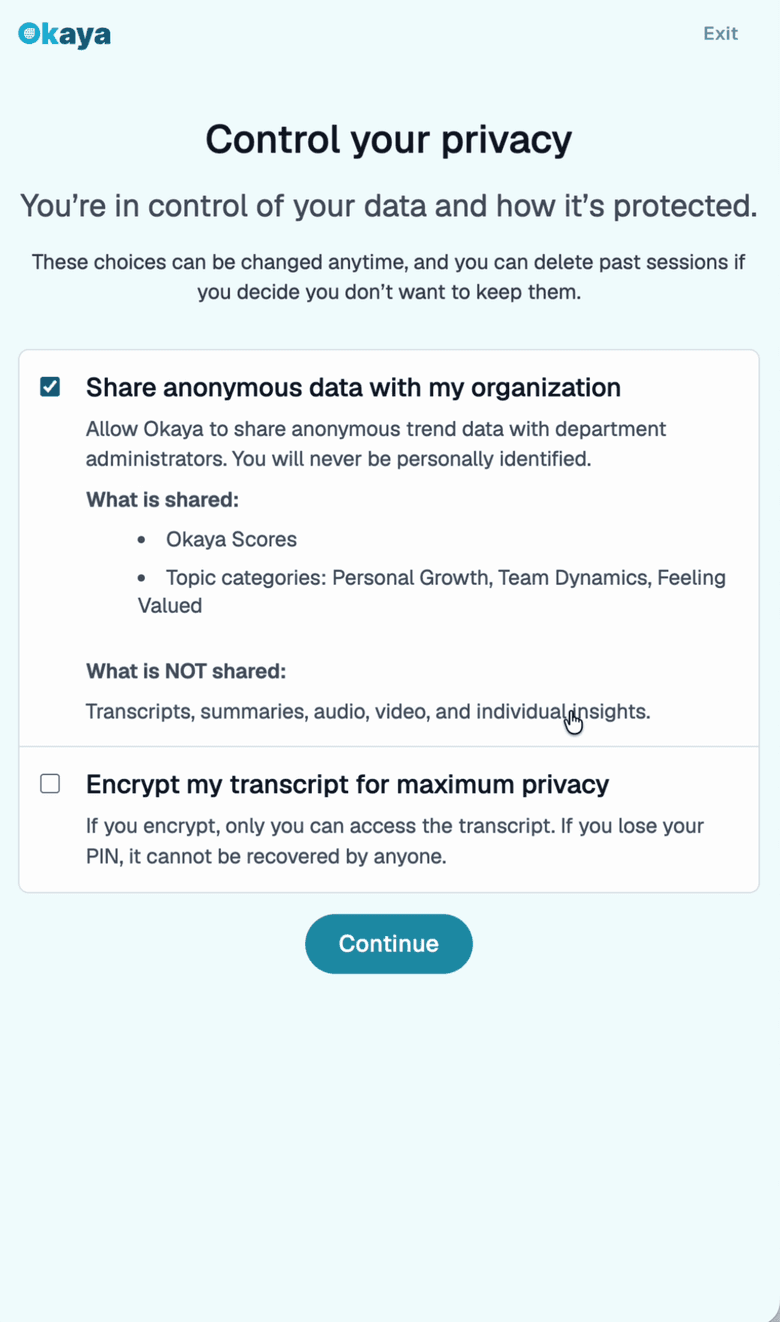
The video never leaves the device.
Okaya never identifies who you are from your face. There is no facial recognition.
Coaches and staff see
Leadership sees anonymized, aggregated unit-level readiness only. Never who checked in, how anyone did, or anything they said.
A leader cannot see who checked in.
Okaya is for adults 18 and over: college and professional athletes, never youth or high school.
What Okaya is not
For your sport psychologist or director of athlete mental health, your athletic trainer and team physician, compliance, and the players association.
- Not a clinical tool and not a medical device. It does not diagnose or treat.
- Never for playing time, selection, eligibility, scholarship or contract decisions.
- Not a replacement for your sport psychologist, athletic trainer or team physician. Their care and their referral paths stay as they are.
- Not the tool your licensed clinicians choose for the yearly mental health check in NCAA best practices. Okaya adds to their work and never stands in for it.
- Not a crisis line. If a check-in raises a safety concern, the athlete sees 988, 911 and the contacts your staff add.
For unions and players associationsWhat happens if a check-in raises a safety concernThe science
For the athletic director or general manager
- Care you can show. You keep a record of each event you marked and the group's readiness after it, with no individual athlete's result in it.
- Fits the rules you work under. NCAA best practices keep mental health checks away from playing time, eligibility and scholarships, and a players association will ask the same of any athlete data. Okaya gives staff no individual result to misuse.
- One contract, billed directly. Your department or club buys Okaya from us for the year. Athletes use their own phone or laptop, and we'll set your team up with you.
Want to see how it fits your roster? Talk to us and we'll walk you through it.
Talk to usIn short
- Okaya is a short, private readiness check-in for adult athletes in college and professional sport. Each athlete talks with Sanora, Okaya's AI guide, for about 3 minutes. The result is theirs.
- Performance staff, coaches and the athletic director see how the group is doing, never one athlete. Leadership sees anonymized, aggregated unit-level readiness only. Never who checked in, how anyone did, or anything they said. A leader cannot see who checked in.
- Okaya is not a clinical tool and is never used for playing time, eligibility, scholarship or contract decisions. It adds to the work of your sport psychologist and athletic trainer and never replaces it.
Questions
Can the head coach see how one athlete is doing?
No. Leadership sees anonymized, aggregated unit-level readiness only. Never who checked in, how anyone did, or anything they said. A leader cannot see who checked in. The coach sees the group, never one athlete.
Can results be used for playing time, eligibility, scholarships or contracts?
No. Okaya is never used for playing time, selection, eligibility, scholarship or contract decisions. No one on staff sees an individual athlete's result, so there is nothing to use.
How does Okaya fit with our sport psychologist and athletic trainer?
Okaya adds to their work and never replaces it. Your clinicians keep their own tools, their referral paths and their authority over care. The group view gives them a read on how the team is doing, and athletes can see your staff's contacts in Okaya.
Is Okaya a mental health service?
No. Okaya is a readiness check-in. Mental health care stays with your licensed clinicians. Okaya is not a clinical tool and not a medical device, and it does not diagnose.
Do athletes have to check in?
No. Athletes check in when they choose, and a leader cannot see who checked in. A check-in topic you send is offered in each athlete's next check-in.
What will the players association ask?
Whether the check-in is voluntary, who sees what, and whether results can reach a contract or roster decision. Athletes choose when to check in, individual results stay with the athlete, and Okaya is never for contract or roster decisions. Our sheet for unions and associations, at okaya.me/unions, answers these questions on one page.
Is Okaya for high school or youth teams?
No. Okaya is for adults 18 and over: college and professional athletes.
How do we buy it?
Your department or club buys Okaya directly from us. Book a 20-minute call and we'll set your team up with you.
Field notes: Adult athletes need better readiness support.
Sharing this with your athletes? Send them okaya.me/athletes. It explains what a check-in is and what stays theirs.
Plan the season's check-ins with us.
A 20-minute call covers your roster, your calendar and who on staff sees the group view.