Know how every drill, schedule change and hard call lands with your crew.
Send a conversation starter after a hard call, a training day, a new schedule or a peer-support session. Each member checks in privately in about 3 minutes. You see the group's readiness and the topics it raises most. What the crew learns stays when people move on.
- 3 minA private check-in on any phone or laptop
- 2Peer-reviewed papers in 2026, from IRB-approved studies
- Phase IIU.S. Air Force SBIR contract
- 3-monthU.S. Space Force squadron readiness trial
Research and contracts withU.S. Air ForceU.S. Space ForceJMIR Formative ResearchACM IUI 2026
How it works
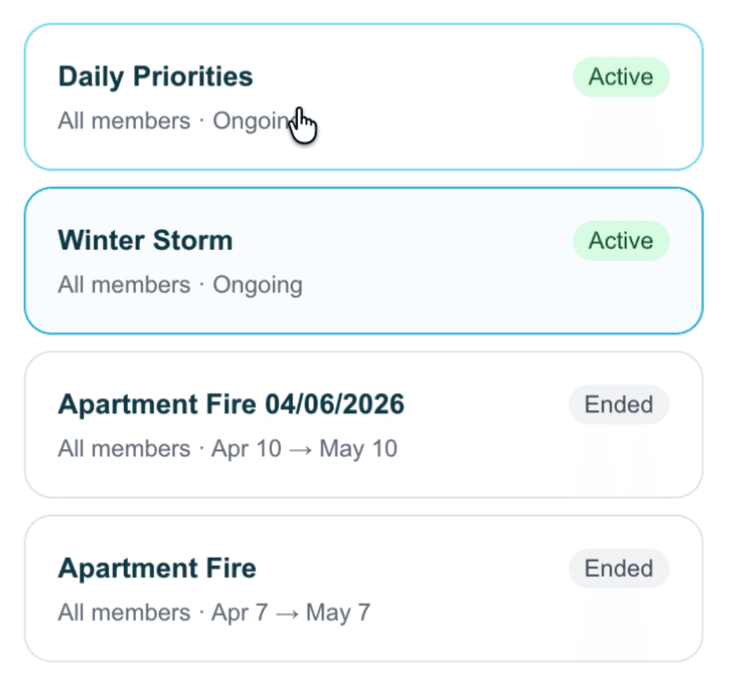
It's the same Okaya check-in, built around the events your department picks.
Plan the year
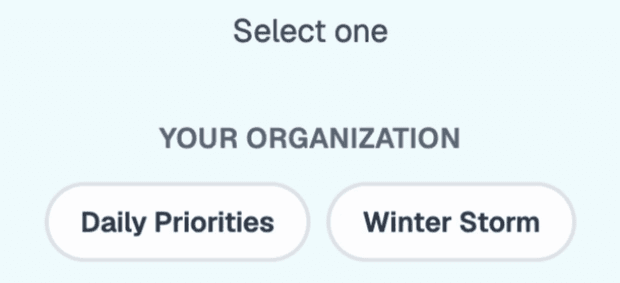
Pick 4, 5 or 6 conversation starters and put them on the calendar: a drill, a promotion, the end of the season.
Everyone joins free
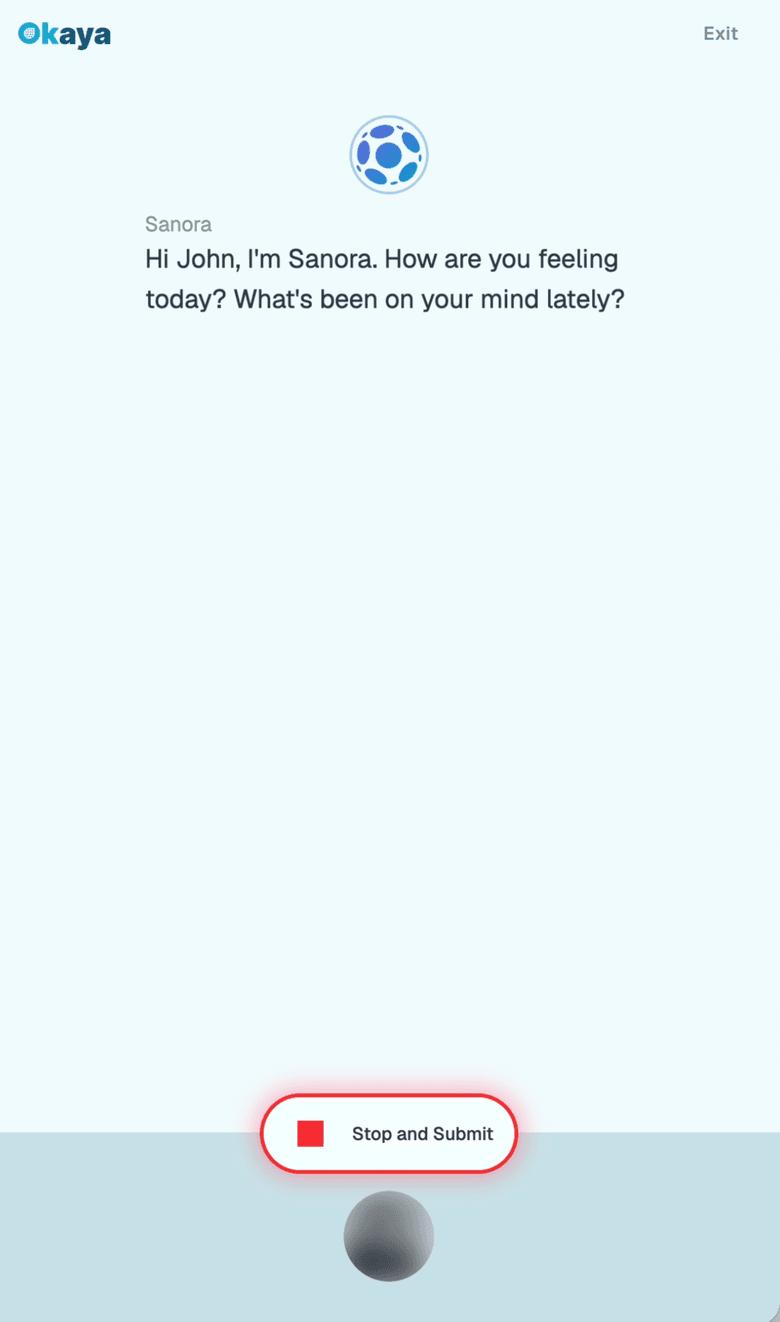
Each member gets a free Okaya account and does a short, private check-in: about 3 minutes talking with Sanora. Their result is theirs.
Send the starter
On the planned day, or the day of a hard call, the starter goes to everyone covered. Okaya brings it up in each person's next check-in.
See how the group is doing
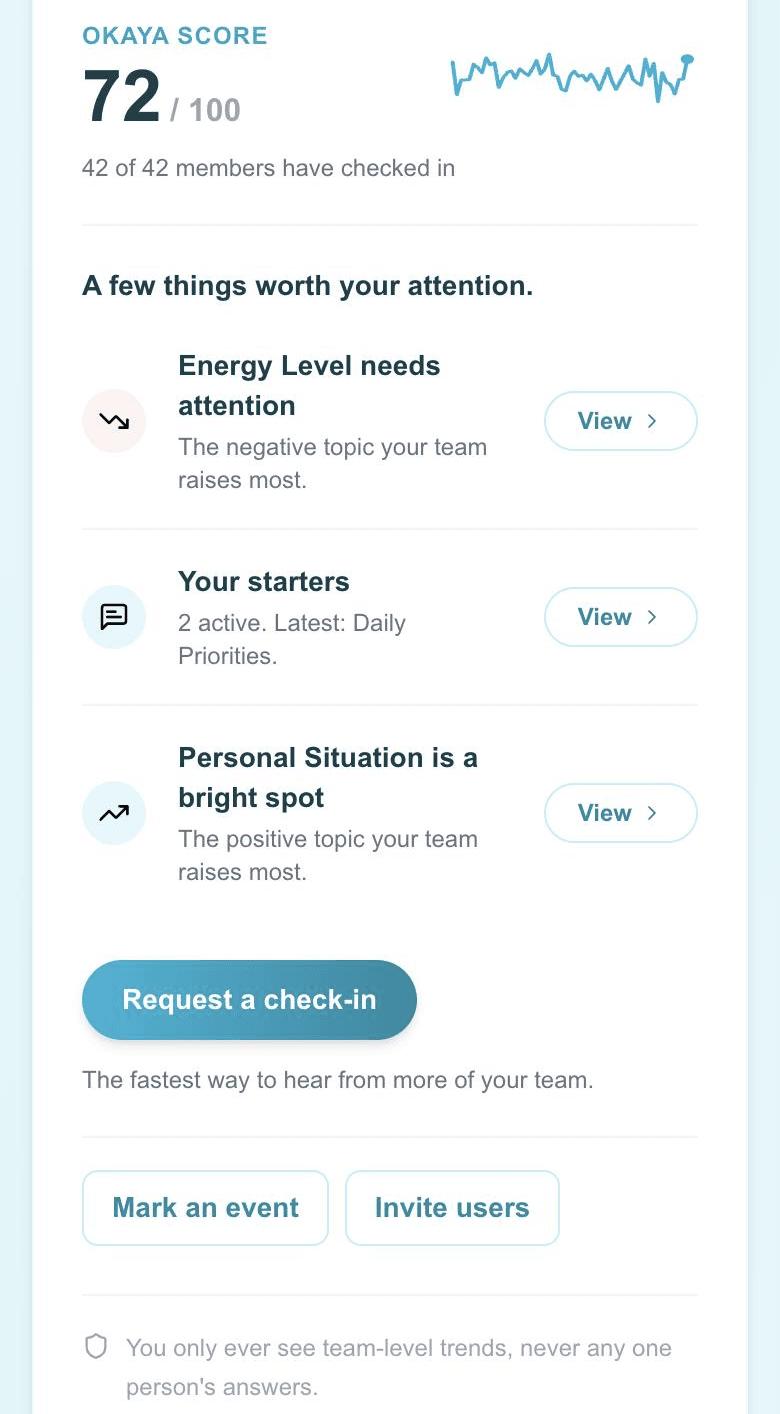
Once enough people have answered, you see the group's readiness for that event.
Set up your crew's group today.
Start freeInstitutional knowledge
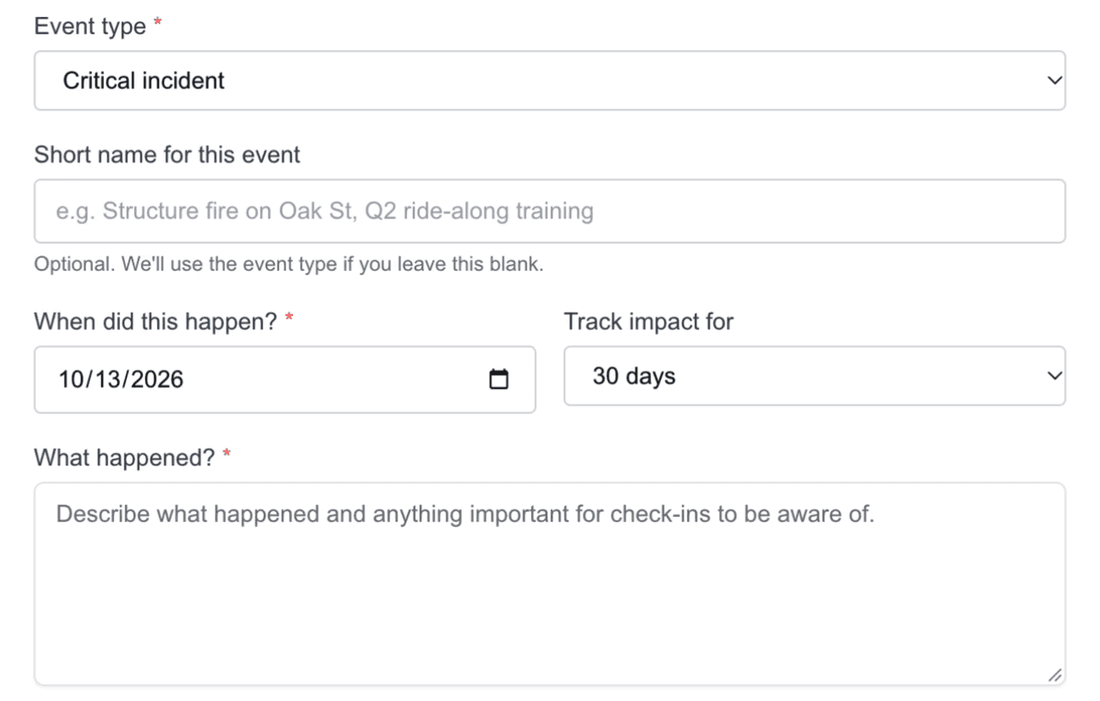
Every event keeps its date, what happened, and the group's readiness after it. When people rotate, the next peer team or training officer starts from what this one learned.
AvailableAdd the costs around each event, like overtime and sick leave, and see them next to the group's readiness.
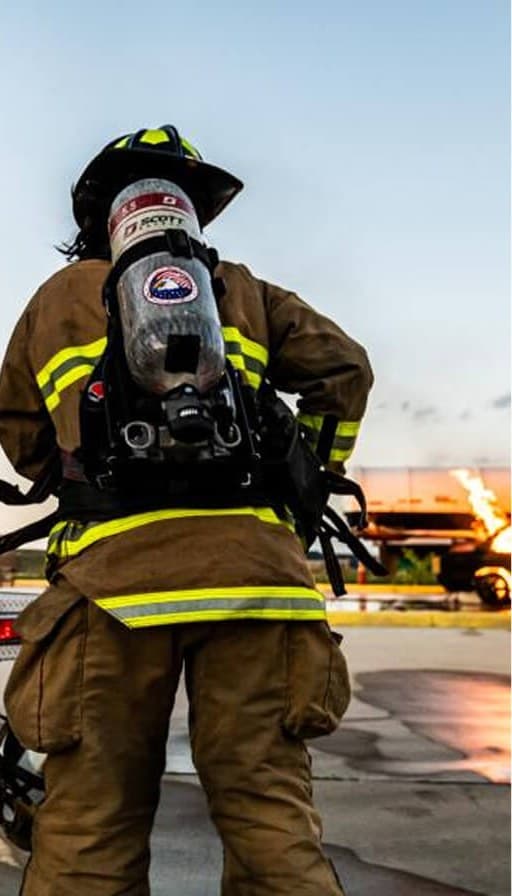
“Okaya gives our people objective data about their readiness state.”
 Lt. Tyler CapronBoulder Fire Rescue
Who sees what
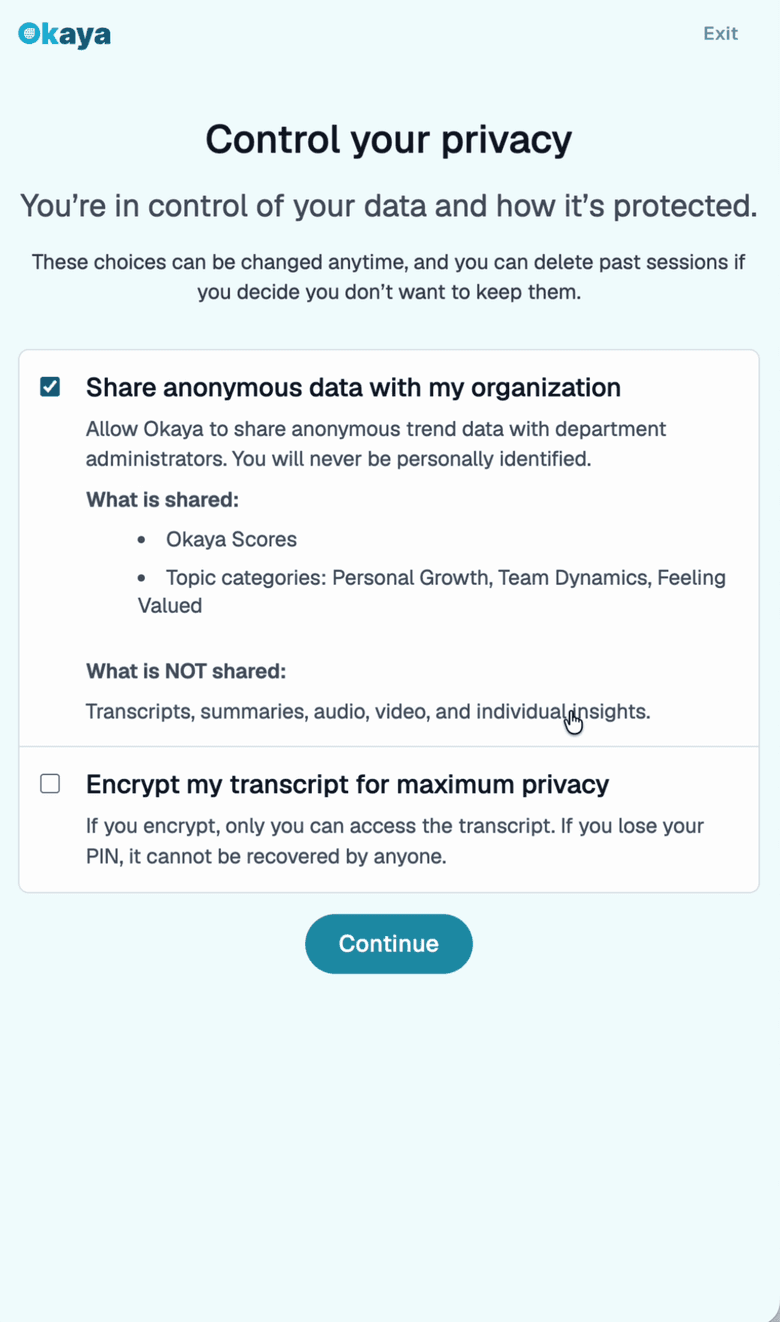
Each firefighter sees
Your result is yours: you see your own score.
No video leaves your phone.
Okaya never identifies who you are from your face. There is no facial recognition.
Leadership sees
Leadership sees group trends only, and only when the minimum number of people are in your group. Never who checked in, how anyone did, or anything they said.
Okaya is for adults 18 and over.
What Okaya is not
- Not a clinical tool and not a medical device. It does not diagnose or treat.
- Never for discipline, staffing or fitness-for-duty decisions.
- Not a replacement for your peer team, CISM or EAP. They stay as they are.
- Not a crisis line. If a check-in raises a safety concern, members see 988, 911 and your own contacts.
For the chief
- Duty of care you can show. A record of every event and the group's readiness after it, without anyone's private result.
- One invoice a year. Your quote shows the price for the year and the most you could pay, so your board sees the full cost before you sign.
- Nothing to install. Members use their own phone or laptop. We set your department up with you.
Pricing
Standby is how a department buys Okaya readiness for the year. The price depends on how many people you cover and how often you send a conversation starter.
A conversation starter is a short note to everyone covered about a drill, a promotion or a hard call. Okaya brings it up in each member's next check-in.
$80 to $120 per person a year
From $1,200 a year. One invoice for the year, plus any extras you send.
| How often | Per person a year | 20 people |
|---|---|---|
| 4 a year (one a quarter) | $80 | $1,600 |
| 5 a year | $100 | $2,000 |
| 6 a year (one every two months) | $120 | $2,400 |
- Who's covered: everyone in the department, or everyone in one group, like a shift, a company or the peer team. Adults only. Everyone covered gets a free Okaya account.
- Your year includes: setting up your department with us, your planned starters for everyone covered, and the group's readiness once enough people answer.
- Smallest year: $1,200, and it covers up to 15 people. People who join during the year are covered at no extra cost.
- Room for hard calls: you can pre-approve up to 2 extra starters when you sign. You pay only if you send them. With both, the most a 20-person year at one a quarter can cost is $2,600.
Want to see it first? Trying Okaya is free, and no card is needed.
Start freeNeed a quote for your board? Talk to us, and we'll send a one-page quote with your yearly price and the most it can cost.
Talk to usIn short
- Okaya is a short, private check-in for firefighters. Each firefighter talks with Sanora, Okaya's AI guide, for about 3 minutes, and the result is theirs.
- Conversation starters tie check-ins to the events you care about, from drills to hard calls, and leadership sees how the group is doing after each one. Leadership sees group trends only, and only when the minimum number of people are in your group. Never who checked in, how anyone did, or anything they said.
- Okaya is not a clinical tool and is never for discipline, staffing or fitness-for-duty decisions. Your department buys Okaya on the Standby plan: $80 to $120 per person a year, from $1,200.
Questions
What is a conversation starter?
A short note the lead or chief sends to everyone covered, about a planned day or a recent call. Okaya brings it up in each member's next check-in, and once enough people have answered, you see the group's readiness for that event.
Do members have to check in?
No. Check-ins are voluntary. Members check in when they choose, and a starter shows up in their next check-in.
How long does a check-in take?
About 3 minutes. You talk with Sanora, Okaya's AI guide, and the check-in compares how you sound, what you say and how your expression moves today with your own earlier check-ins.
We have fewer than 15 people. Can we use it?
Yes. The smallest Standby year is $1,200, and it covers up to 15 people. Group results follow the privacy rule on this page.
What if we have a hard call after our planned starters?
You can pre-approve up to 2 extra starters when you sign. Each is $25 per person covered, billed only if you send it, so the first two don't wait for a board vote. If you expect more than four starters in the year, plan them from the start: a planned starter is $20 per person, an extra is $25.
What happens after a hard call?
The lead sends the next starter that day, and each member sees it in their next check-in. Your peer team and CISM process stay as they are, and members see the support contacts your department sets up.
How do we start?
Start free to set up your group, or talk to us and we'll set up Standby with you.
Sharing this with your crew? Send them okaya.me/firefighters: what a check-in is, and what stays theirs.
Start with your crew this week.
Set up your group in a few minutes. Talk to us when you want Standby for the whole department.