Safety
When a check-in raises a safety concern
If something you say in a check-in sounds like you may be at risk of harm, Okaya asks if you're ok and shows you who can help: 988, 911 and your own team. By default, no one at your organization is told.
What happens in that moment?
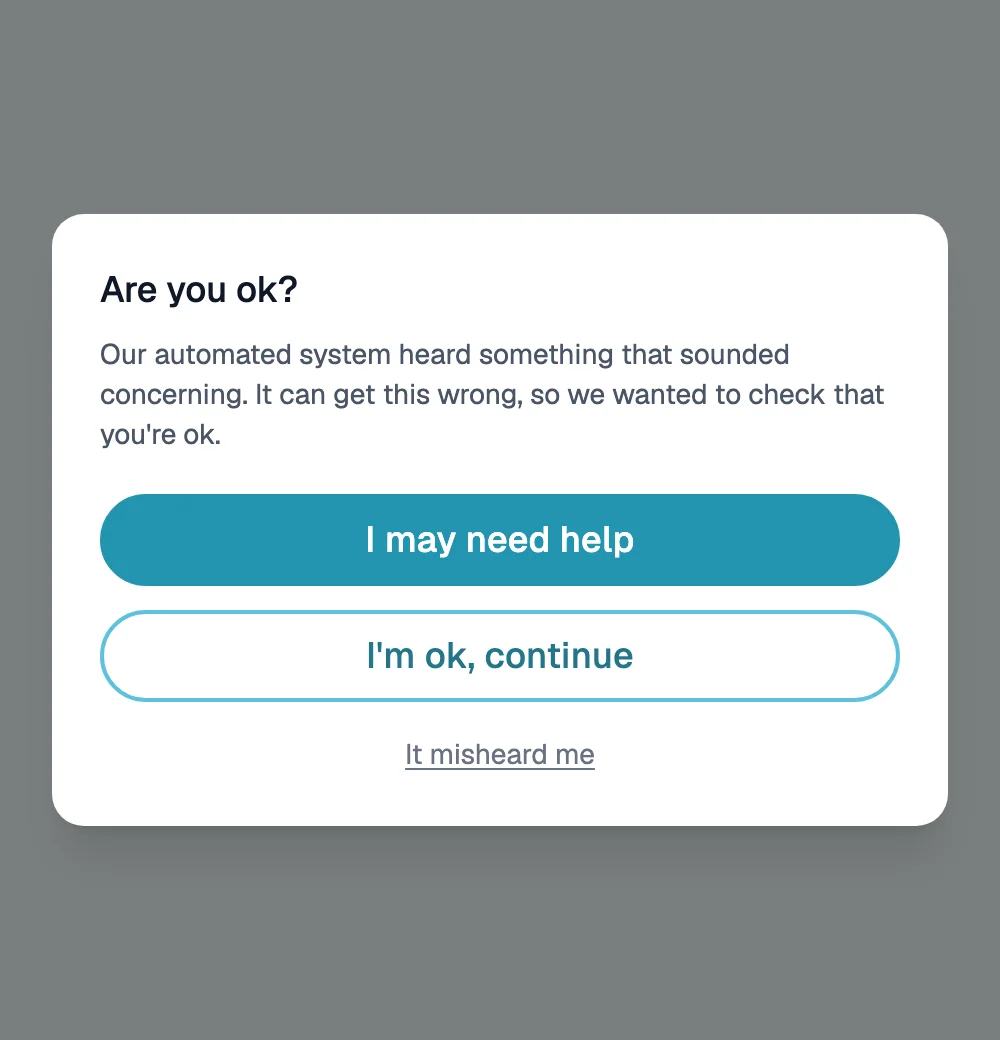
Sanora asks if you're ok
When something you say sounds concerning, a short question appears. You choose: "I may need help", "I'm ok, continue", or "It misheard me".
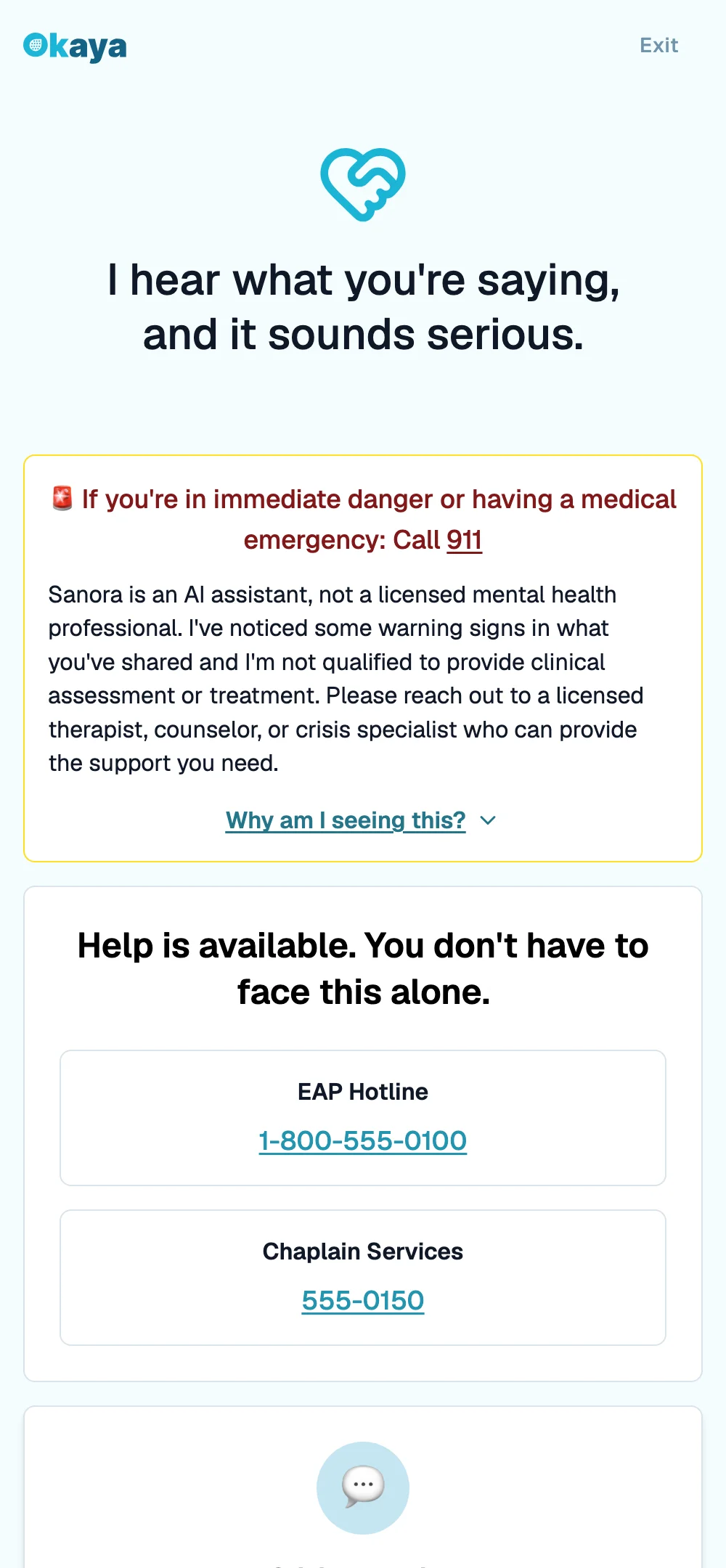
If you may need help, the check-in stops
The check-in ends without a score. You see a screen with 911, the 988 Suicide & Crisis Lifeline, the Crisis Text Line, the Veterans Crisis Line, and the contacts your own organization added, such as a peer support lead or a chaplain. Every number is one tap away.
At the end of a check-in, the same help is there
If the conversation as a whole shows a high risk of harm, the end of the check-in shows the same resources, unless you already told Sanora you're ok or that it misheard you.
Where does this safety net run?
Everywhere you use Okaya: in a check-in, in a chat with Sanora, and in the DBT diary card. The check and the help you see work the same way in each one.
Who is told?
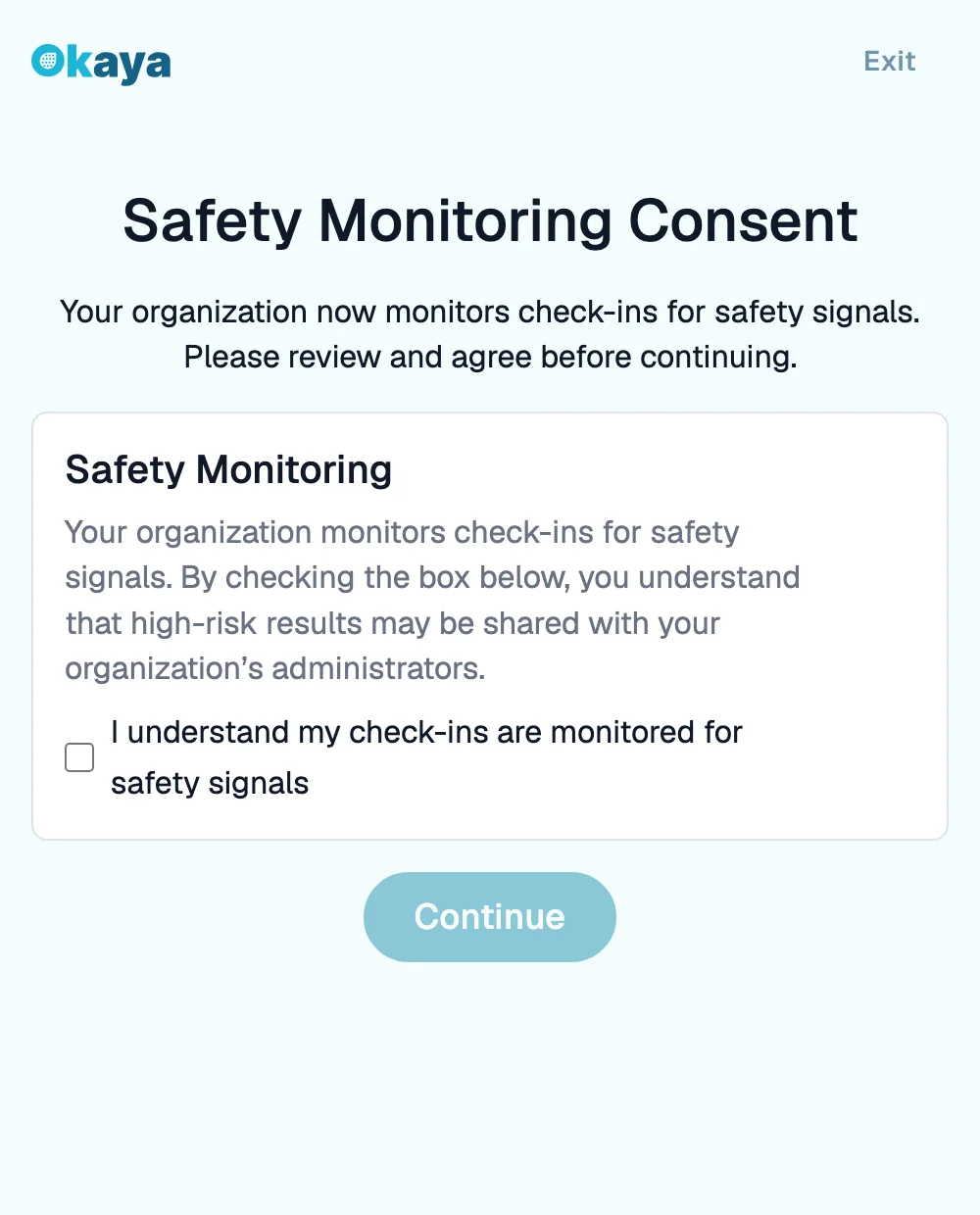
By default, no one at your organization is told. A very few organizations, with specific requirements, turn on Safety Monitoring. There, members agree to it before their first check-in, and if a check-in shows a high risk of harm, the organization's administrators can see that it happened and who it was, so they can reach out. They never see your score or what you said.
Safety Monitoring is off unless an organization asks for it. Where it is on, the agreement appears before the first check-in, as in the screen shown here.
What Okaya is not
Okaya is not a crisis service and is not watched around the clock. No one at Okaya sees or responds to these moments. If you are in danger, call 911. Call or text 988 any time.
Okaya is a readiness check-in. It does not diagnose or treat, and it does not replace your crisis plan, your peer support team or a professional.
How does the check work?
In a check-in, two checks read the words of the conversation, in English: one while you talk, and one after the check-in ends. They do not use your voice or your face to decide.
We test both checks against written scenarios before every release. We tune them to ask "Are you ok?" rather than miss a moment, so you may sometimes see the question when you're fine. The approach was reviewed by our clinical advisors.
Questions
Does my chief or manager see this?
By default, no one at your organization is told. A very few organizations, with specific requirements, turn on Safety Monitoring. There, members agree to it before their first check-in, and if a check-in shows a high risk of harm, the organization's administrators can see that it happened and who it was, so they can reach out. They never see your score or what you said.
Can I say I'm ok?
Yes. When Sanora hears something that sounds concerning, it asks if you're ok first. You can answer "I'm ok, continue" and carry on with your check-in.
What if it misheard me?
Tap "It misheard me" and continue. The check can get things wrong, and it is tuned to ask rather than miss a moment.
Is Okaya a crisis line?
Okaya is not a crisis service and is not watched around the clock. No one at Okaya sees or responds to these moments. If you are in danger, call 911. Call or text 988 any time.
Does this only happen in check-ins?
No. The same check and the same help work in a check-in, in a chat with Sanora, and in the DBT diary card.
What does the check listen for?
It reads what you say or write, in English. It does not use your voice or your face to decide.
Is Okaya a medical device?
No. Okaya is a readiness check-in. It does not diagnose or treat.
More: the science behind the check-in, Okaya for clinics, Okaya for fire departments, or contact us.