Bring your week to session on one page.
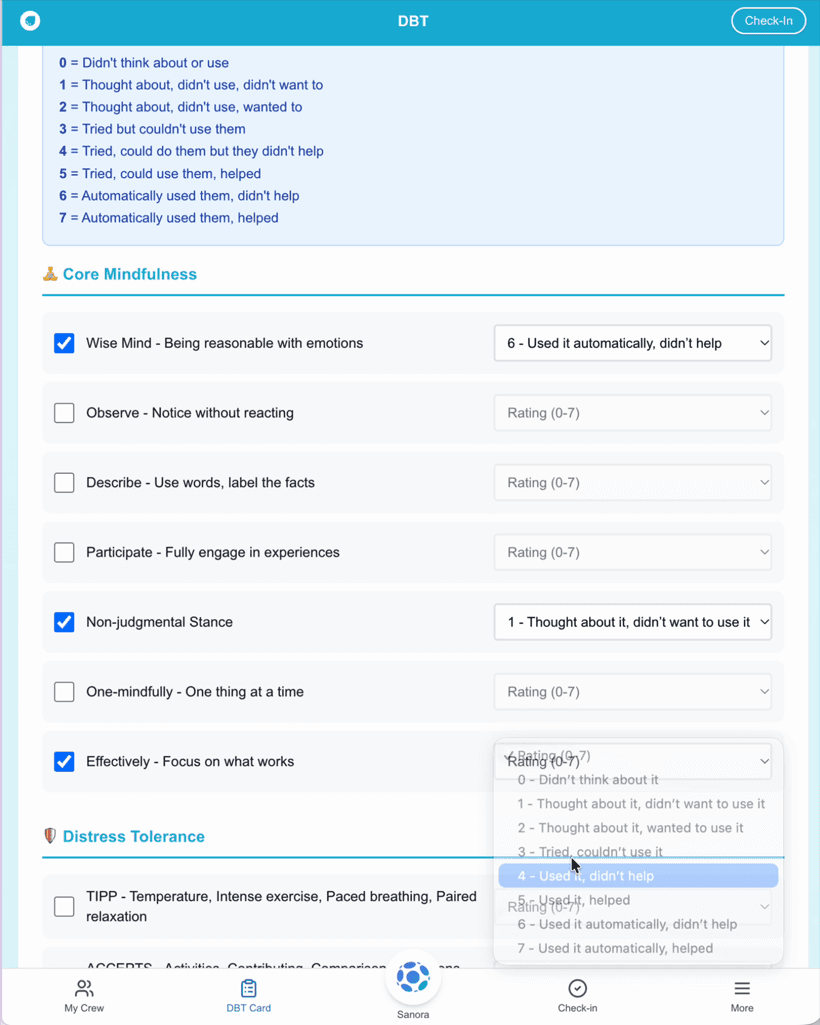
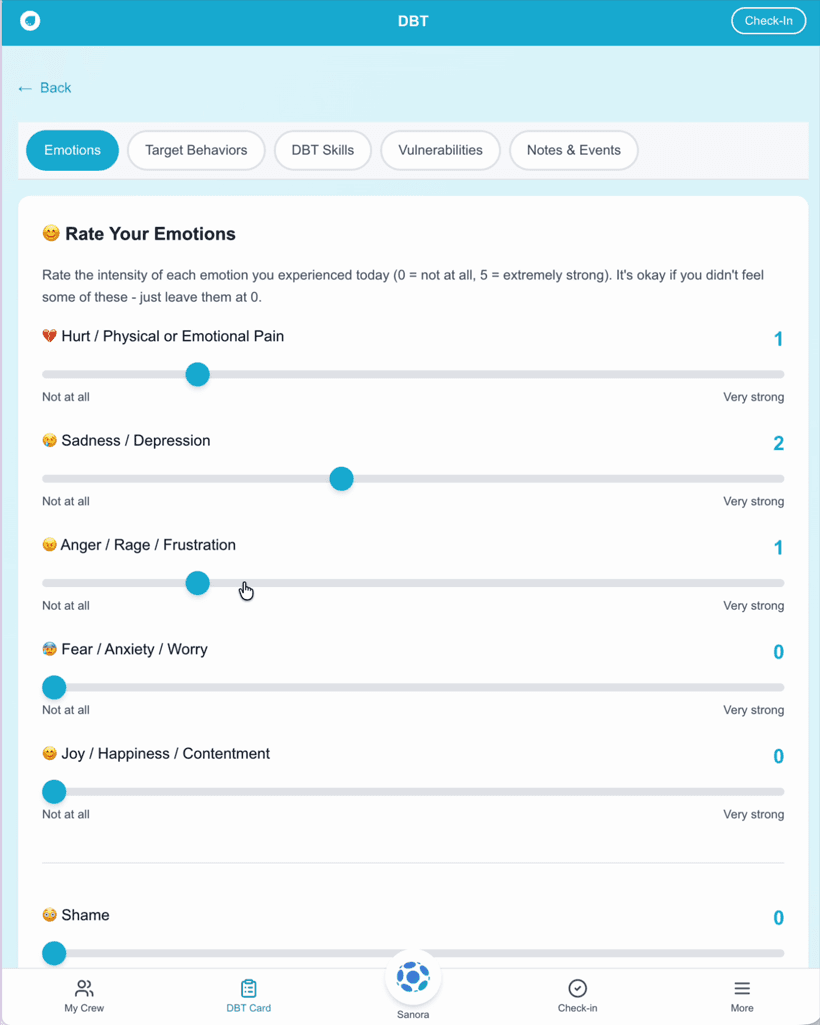
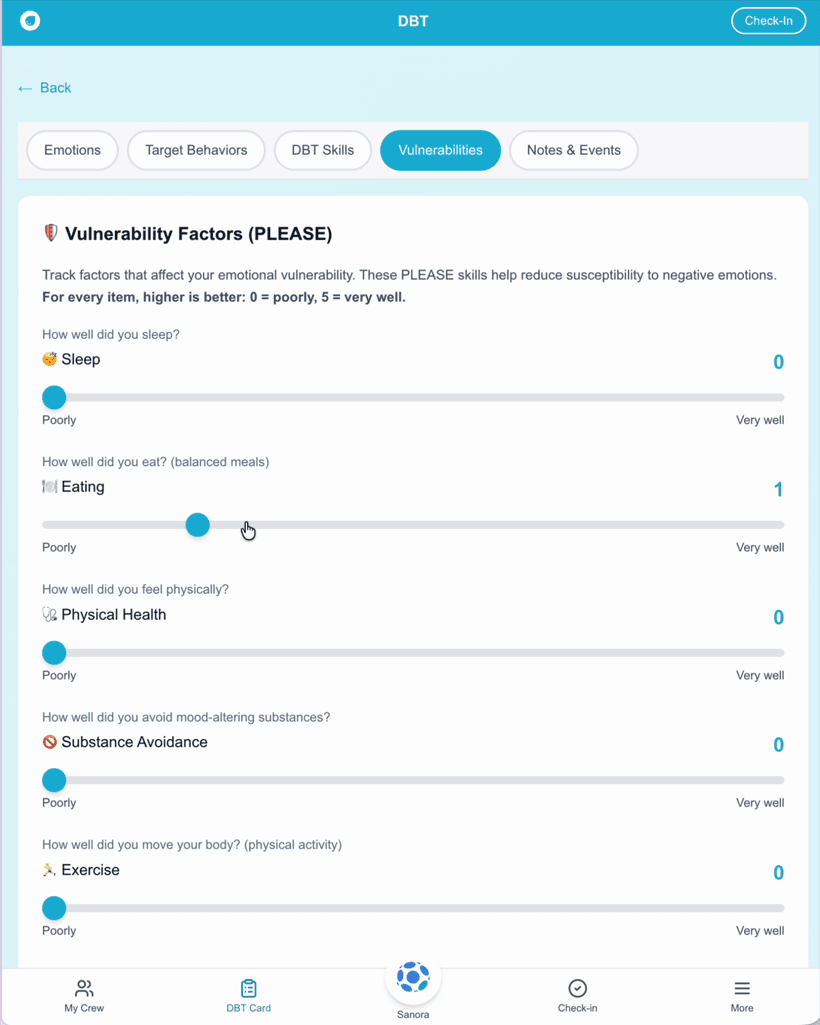
Log emotions, target behaviors, DBT skills and the PLEASE factors on your phone, on the day it happens. At the end of the week, Okaya builds a one-page summary, and you decide whether to bring it to session.
Your clinic sets up the diary card with you. Okaya is for adults 18 and over.
How it works
Set it up in session
Your therapist sets up the account with you and walks through each box: why it is there and how it helps the session and the chain analysis.
Log the day as it happens
Your target behaviors stay on the card, so you do not re-enter them. The open boxes hold as much as you want to write, in the moment.
Bring your week
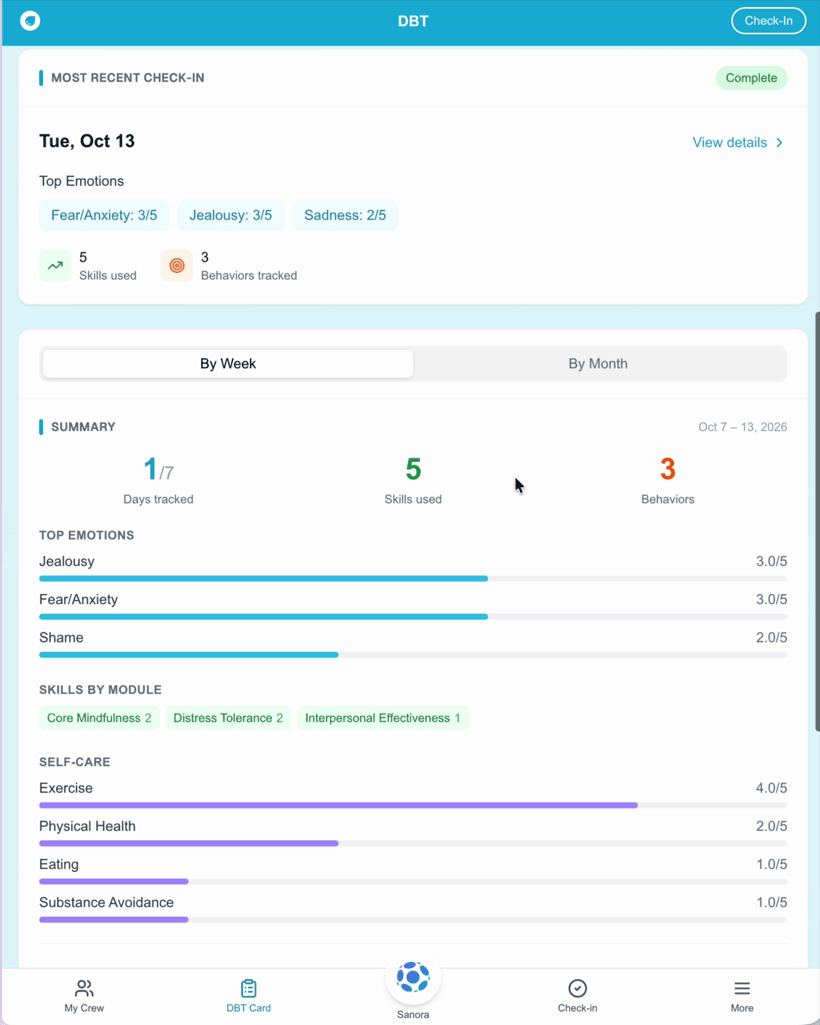
At the end of the week, Okaya builds a one-page summary.
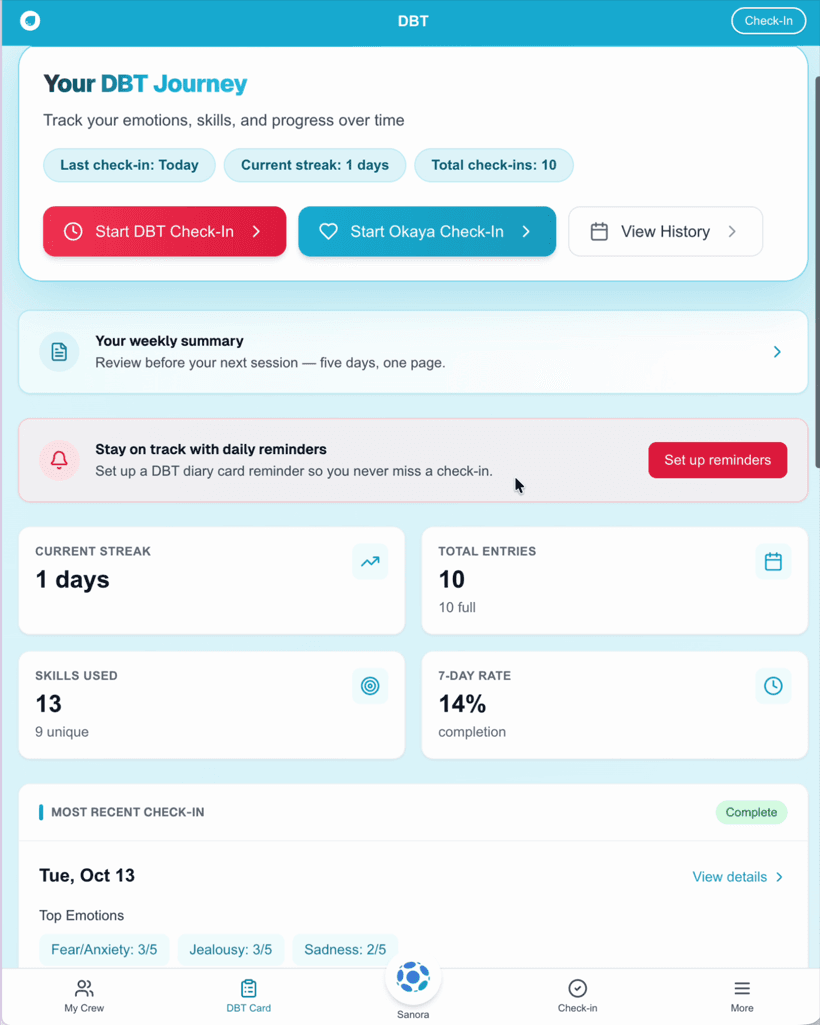
Sample data.
You can also do a short, private check-in with Sanora, Okaya's AI guide, when you choose. You talk for about 3 minutes, and Okaya compares how you sound, what you say and how your expression moves today with your own earlier check-ins.
What stays yours
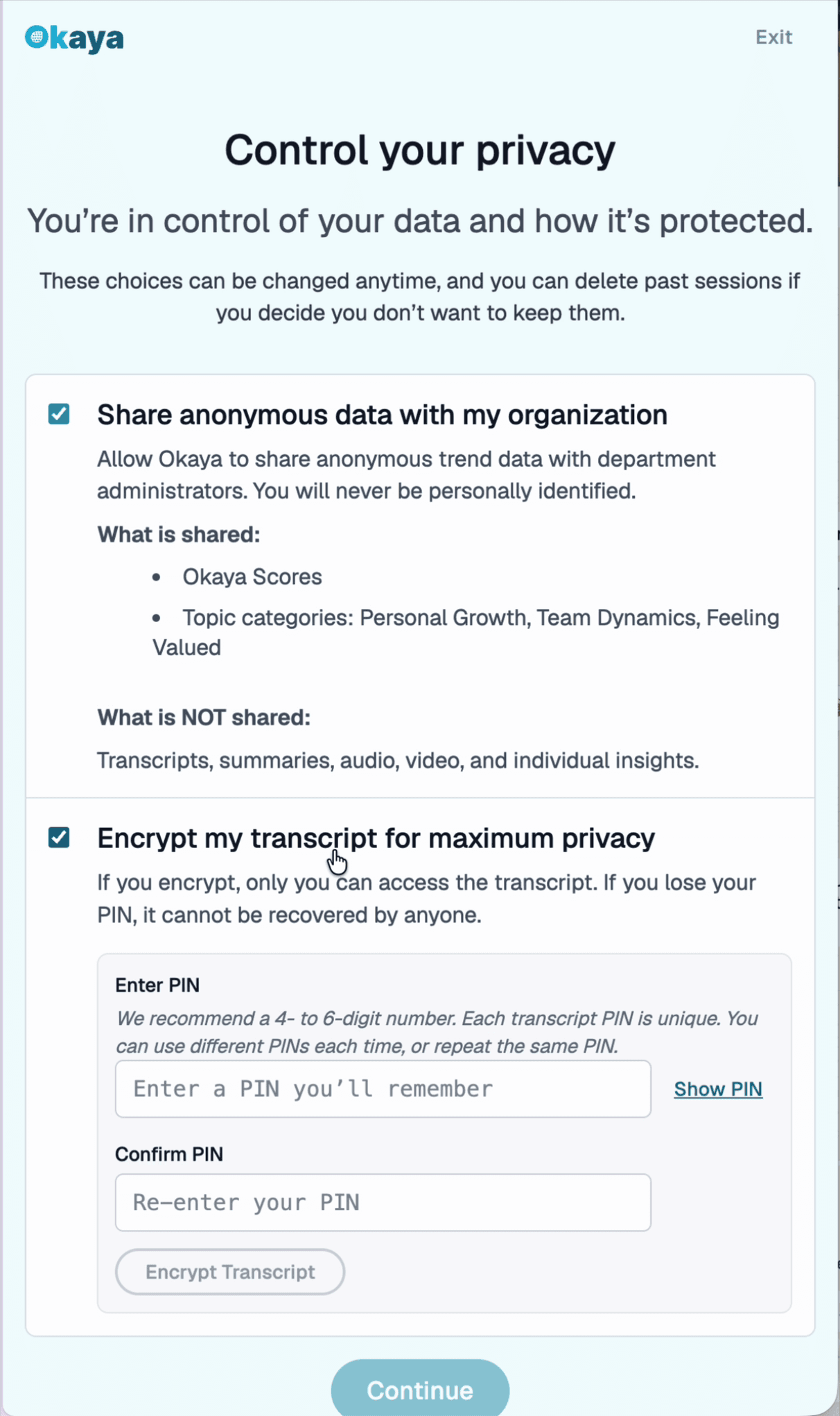
Your diary card, check-ins and weekly summary are yours. Your therapist sees the weekly summary only when you bring it to session or send it securely. Your clinic sees how its DBT program is used, in totals, never your card or check-ins.
You decide whether to bring the weekly summary to session or send it securely.
Okaya is voluntary for clients and sits outside treatment. It is not part of the clinical record, and no data moves between Okaya and your clinic's EHR.
The video stays on the phone. The phone extracts the facial landmarks. The landmarks and the voice audio go to the server, where the analysis runs.
Okaya never identifies who you are from your face. There is no facial recognition.
Okaya is for adults 18 and over.
In short
- Okaya has a digital DBT diary card for adults, with a one-page weekly summary you can bring to session.
- Your diary card, check-ins and weekly summary are yours. Your therapist sees the weekly summary only when you bring it to session or send it securely. Your clinic sees how its DBT program is used, in totals, never your card or check-ins. You decide whether to bring the weekly summary to session or send it securely.
- Okaya sits outside treatment and is not part of the clinical record.
Questions
Can my therapist see my diary card?
Your diary card, check-ins and weekly summary are yours. Your therapist sees the weekly summary only when you bring it to session or send it securely. Your clinic sees how its DBT program is used, in totals, never your card or check-ins. You decide whether to bring the weekly summary to session or send it securely.
Is Okaya part of my treatment or my clinical record?
No. Okaya is voluntary for clients and sits outside treatment. It is not part of the clinical record, and no data moves between Okaya and your clinic's EHR.
What happens if I rate a high urge?
Okaya does not monitor you and does not alert your clinic. It shows you your own safety plan and crisis lines, and your crisis plan with your therapist stays as it is. If you are in danger now, call 911, or call or text 988.
How do I start the diary card?
Ask your therapist to start it with you in a session. They set up the account with you and walk through each box: why it is there and how it helps the session and the chain analysis.
Is Okaya a medical device?
No. Okaya is not a medical device. It does not diagnose or treat, and it sits outside treatment.
Who can use Okaya?
Okaya is for adults 18 and over.
Want to use it with your therapist?
Send this to your therapist. A clinic sets up the diary card for its DBT program on a short call with Okaya.
Clinicians and practice leaders: how clinics use Okaya.
A message you can send your therapist
A digital diary card for our sessions
I found Okaya, a digital DBT diary card for adults. It lets me log emotions, target behaviors, skills and the PLEASE factors on my phone, on the day it happens. At the end of the week, it builds a one-page summary I can bring to session. It sits outside treatment and is not part of the clinical record. Could we look at it together? https://www.okaya.me/clinics
Ask about it at your next session.
Your clinic sets it up with you, and you decide what to bring to session.