Three private minutes at the end of a clinic day.
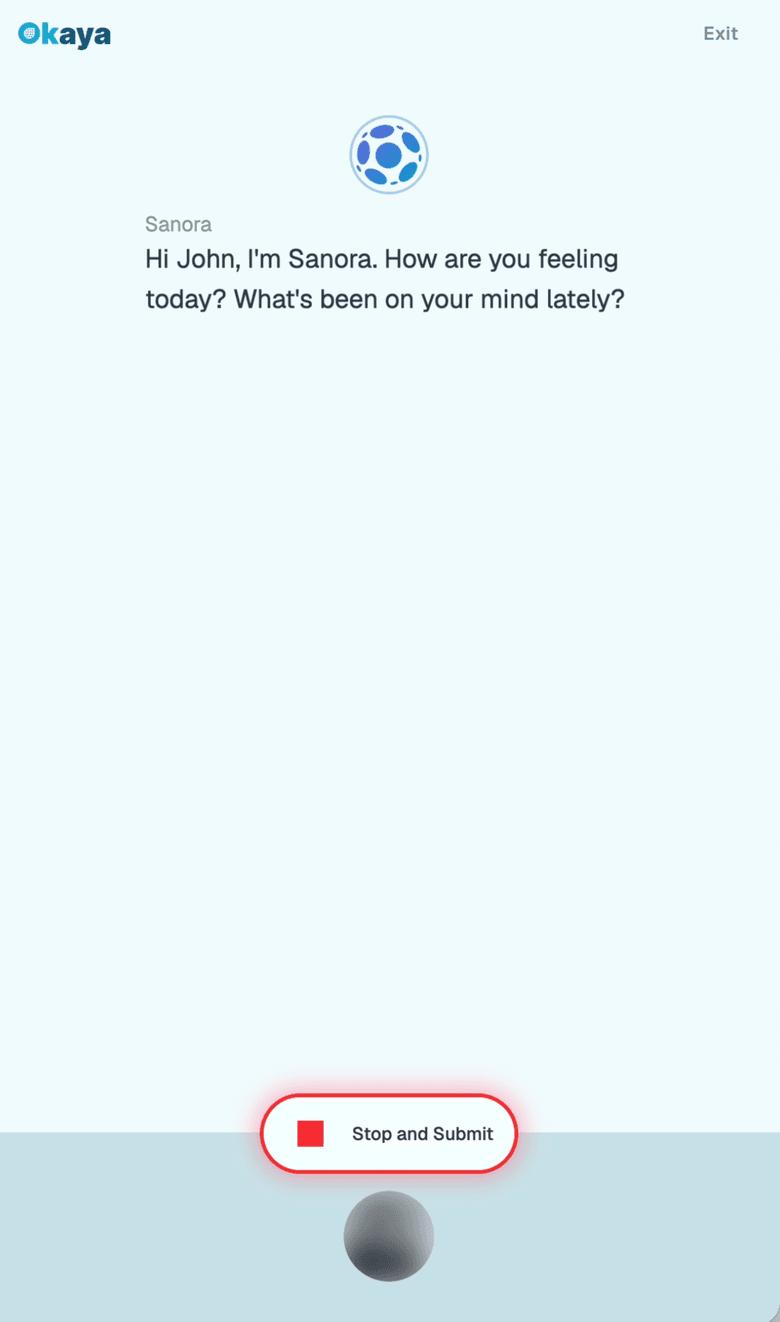
Okaya gives you a short, private check-in of your own. You talk with Sanora for about 3 minutes on your phone, whenever you choose, and see how today compares with your own earlier check-ins. Your result is yours: you see your own score.
No code yet? Okaya opens through a person. Ask an ambassador, or send your practice owner or clinical director a note. Nothing to install. For adults 18 and over.
How it works
Open it when you want
Check in after a hard session, at the end of the day or before supervision, on your phone or laptop in the browser.
Talk for about 3 minutes
Sanora asks a few questions. Okaya looks at how you sound, what you say and how your expression moves.
See your result
How today compares with your own earlier check-ins, with ideas and resources if you want them.
When your practice sends a conversation starter after a hard week, a difficult case or a training, Sanora brings it up at your next check-in and you talk it through privately.
What you see, and what your practice sees
You see
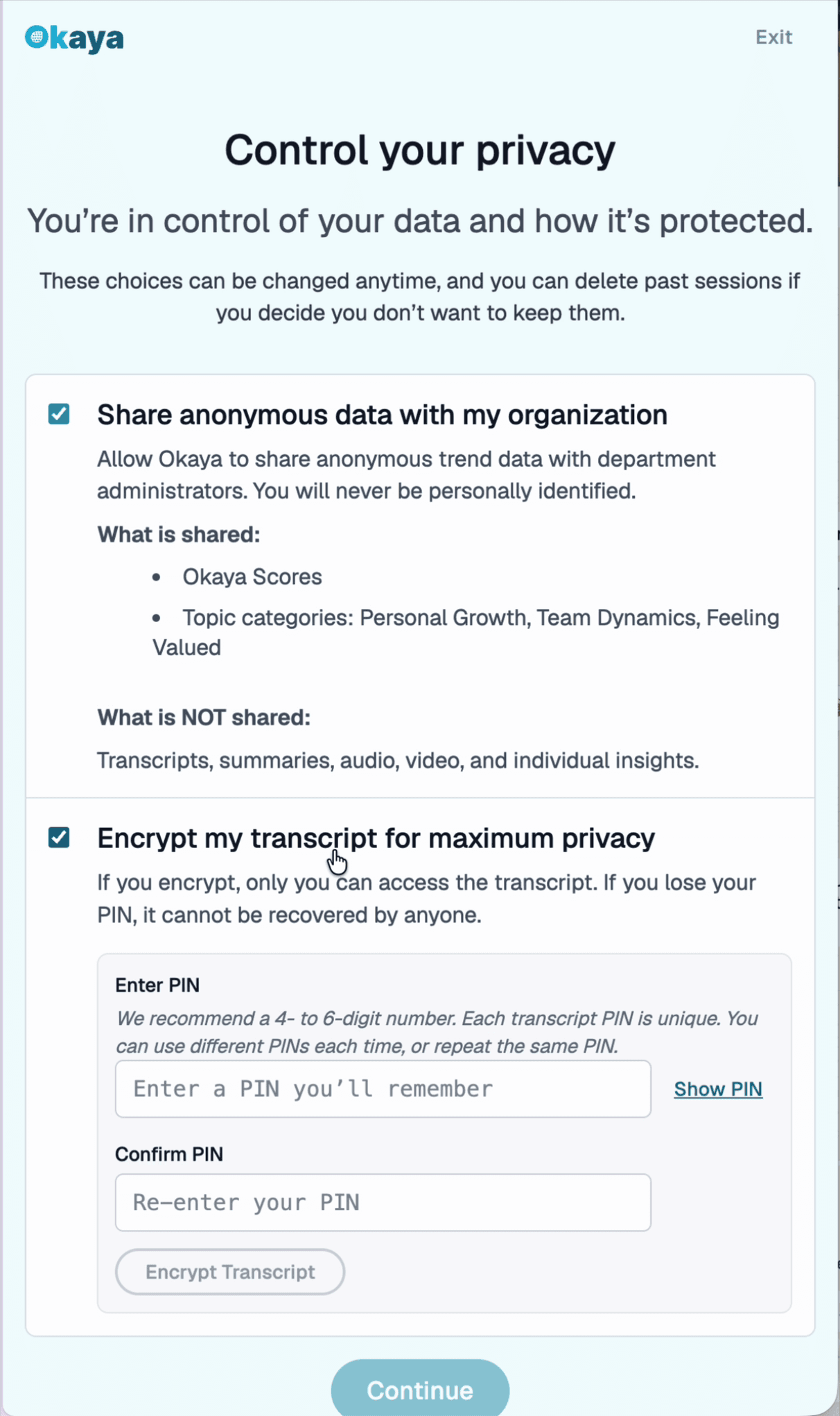
Your result is yours: you see your own score.
The video stays on the phone. The phone extracts the facial landmarks. The landmarks and the voice audio go to the server, where the analysis runs.
Okaya never identifies who you are from your face. There is no facial recognition.
Your practice sees
Your practice sees the team trend only, and only when the minimum number of people are in your group. Never one clinician's results or starter answers.
In short
- Okaya is a short, private check-in for clinicians. You talk with Sanora, Okaya's AI guide, for about 3 minutes on your own phone or laptop.
- Your result is yours: you see your own score. Your practice sees the team trend only, and only when the minimum number of people are in your group. Never one clinician's results or starter answers.
- Okaya is not a medical device and is never for staffing, discipline or fitness-for-duty decisions.
Questions
Can my practice owner or clinical director see my results?
No. Your result is yours: you see your own score. Your practice sees the team trend only, and only when the minimum number of people are in your group. Never one clinician's results or starter answers.
Can it be used against me?
No. Okaya is never for staffing, discipline or fitness-for-duty decisions.
Is this a clinical assessment of me?
No. Okaya is not a medical device. It does not diagnose or treat.
How long does it take, and do I need an app?
About 3 minutes, on your phone or laptop, in the web browser. Nothing to install.
Does Okaya use facial recognition?
No. Okaya never identifies who you are from your face. There is no facial recognition. The video stays on the phone. The phone extracts the facial landmarks. The landmarks and the voice audio go to the server, where the analysis runs.
What is a conversation starter?
A short topic your practice sends after a hard week, a difficult case or a training. You talk it through privately with Sanora at your next check-in. The practice sees the team trend, never one person's answers.
Can I offer the diary card to my DBT clients?
Yes, when your practice sets up the client program with Okaya on a short call. Clients use it by choice.
Want this for your whole practice?
Send this to your practice owner or clinical director. A practice can send a conversation starter after a hard week or a difficult case and see how the team is doing after it, never one person's answers.
Practice leaders: how clinics use Okaya. DBT clients: the diary card.
A message you can send your practice owner or clinical director
A 3-minute check-in for our clinicians
I've been trying Okaya, a short, private readiness check-in. It takes about 3 minutes, and my result is mine. The practice can send a conversation starter after a hard week or a difficult case and see how the team is doing after it, never one person's answers. DBT programs also get a digital diary card for clients. Worth a look: https://www.okaya.me/clinics