Fire Service Psychology Association 2025: We Catch Things Too Late
In short
In October 2025, Okaya's CEO Greg Menvielle spoke at the Fire Service Psychology Association annual conference in Pearland, Texas, on how fire departments can judge AI tools. The stories he heard there all had the same arc: people noticed too late that they were drifting. His takeaway: check in early, privately and often, so people reach the support around them sooner.
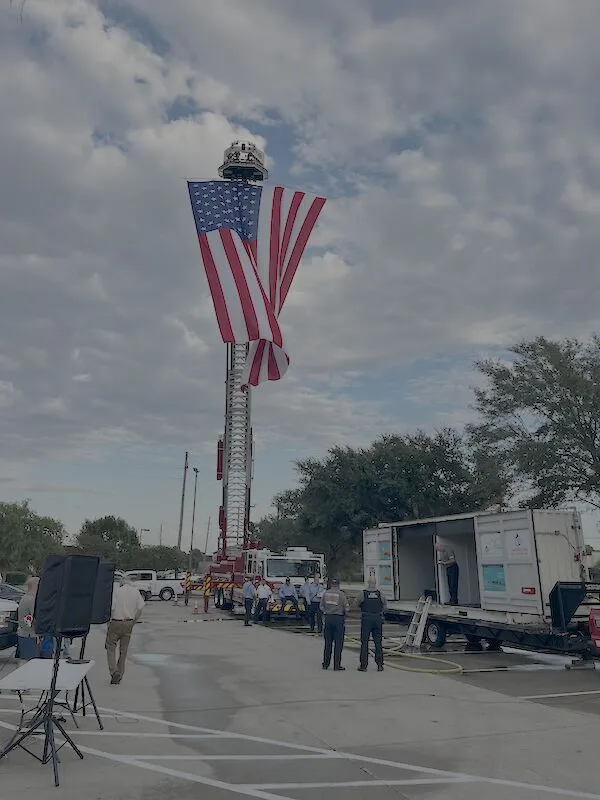
At the Fire Service Psychology Association annual conference in Pearland, Texas, in October 2025, Greg Menvielle, Okaya's CEO, presented Intro to AI for the Fire Service and Mental Health Professionals.
What was the talk about?
How a fire department can judge an AI tool before it buys one. The talk covered the basics of how these tools work, where they are used today, the limits of their accuracy, the legal requirements, and a simple way to evaluate them. The thread through all of it: protect people's privacy, keep a human in charge, and decide with your eyes open.
Greg's report from the conference
I was nervous walking into the Fire Service Psychology Association conference. I'm not a firefighter. Not a psychologist. Not a peer supporter. I'm a founder working on readiness, and Okaya holds an SBIR contract with the U.S. Air Force. I've had to perform CPR, including once when, unfortunately, it didn't work. It's nothing compared to what the women and men of the fire service go through every day.
Then Chief Jason Mays said one of the hardest-hitting lines of the conference: "Never again pass on a folded flag to a surviving loved one." He was talking about his leadership journey after the death of his colleague, Chris, someone who should still be here. The room went completely silent. Not the polite conference silence, the kind that hits you in the gut.
It got even more visceral later that day, when Allen Lude told his own story from 1998. It was 26 years ago, but every detail was still vivid, raw and painful. All of us wanted to hug him, and I'm sure we were glad when the Master of Ceremonies, Robert Avsec, stood up and did.
Every personal story, and there were many, followed the same arc:
- "I didn't realize I was drifting."
- "I waited too long to ask for help."
- "By the time I reached out, I was barely hanging on."
Career or volunteer, big city or small town, it didn't matter.
What was the common problem?
We catch things too late. And that's not only about the worst outcomes. It's also about the people who show up every day while struggling in silence, carrying the weight in ways that affect themselves, their teams and their families.
What did Greg take away?
There's no magic recipe, but there are many people truly committed to being agents of change, worldwide.
A private check-in can be part of the answer: a few minutes, daily, without stigma or fear, so a person notices the drift while they still have the strength to reach out. It should never replace therapy or peer support. Its job is to help people reach those supports sooner.
That's the work this room is doing together: making sure no chief has to pass on another folded flag.
Key points
- Greg Menvielle spoke at FSPA 2025 on how fire departments can evaluate AI tools: accuracy limits, legal requirements, privacy and human oversight.
- The personal stories shared at the conference had one arc: people noticed they were drifting too late.
- A private check-in helps people reach peer support and clinicians sooner. It never replaces them.