Your plant reads every gauge. Give your people a read on themselves.
Anyone who has run a plant, a mine, a refinery or a power plant knows the systems that measure pressure, vibration and air quality are only part of it. The people who keep the place running matter most. Okaya gives each of them a private check-in on their own readiness, and gives your safety team an honest view of the group.
A short, private check-in. You see your own result. Leaders see only the anonymized group view.
- 3 minA private check-in on any phone or laptop
- 2Peer-reviewed papers in 2026, from IRB-approved studies
- Phase IIU.S. Air Force SBIR contract
- 3-monthU.S. Space Force squadron readiness trial
Research and contracts withU.S. Air ForceU.S. Space ForceJMIR Formative ResearchACM IUI 2026
How it works
Each person checks in privately on their own phone, and your safety team sees how the group is doing.
You set up the group
The group can be a unit, a site or a whole operation. Each person gets their own account and checks in on their own phone or laptop, in the browser.
A short, private check-in
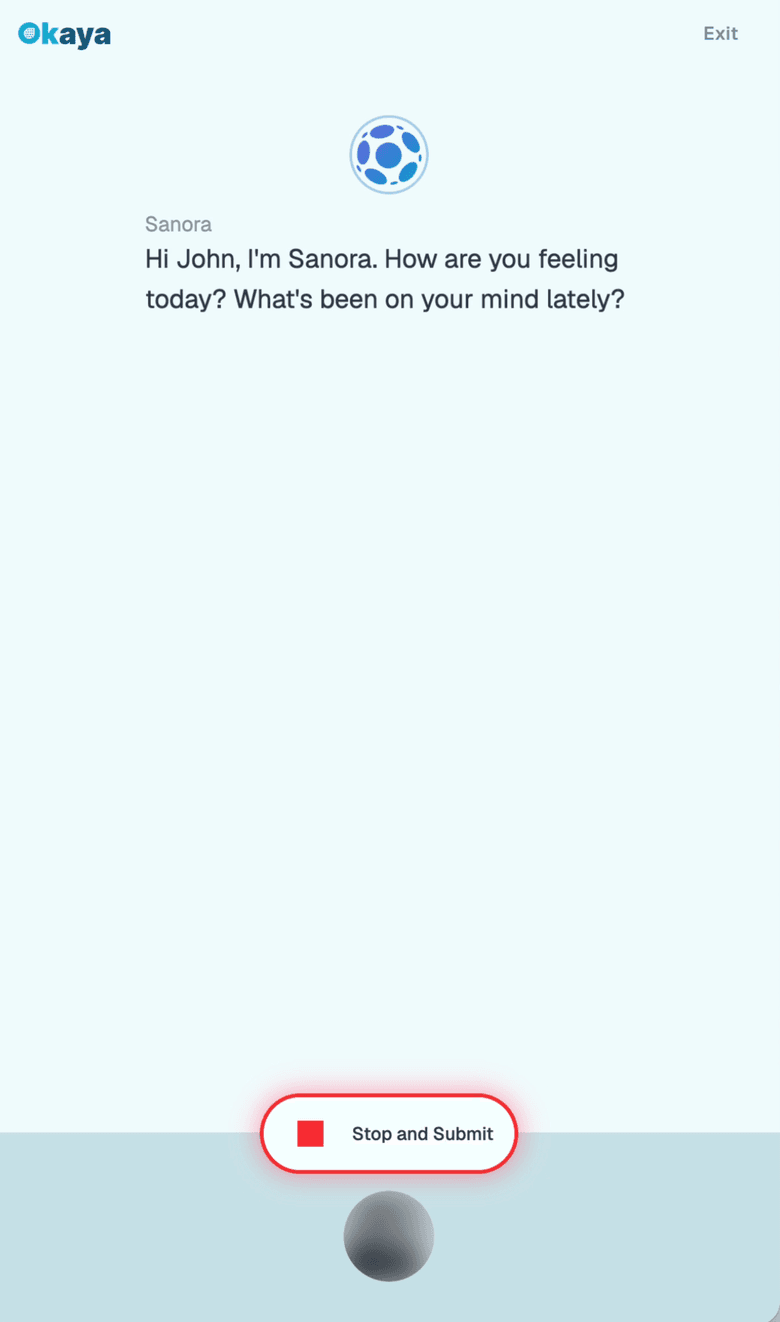
You talk with Sanora for about 3 minutes. Okaya looks at how you sound, what you say and how your expression moves, using points from your face, not a video of you.
Some people check in before a shift, some after. It is never a gate: nothing stops anyone from starting work.
Each person sees their own result
Each person sees how today compares with their own earlier check-ins. What they do with it is their call.
Your team sees the group
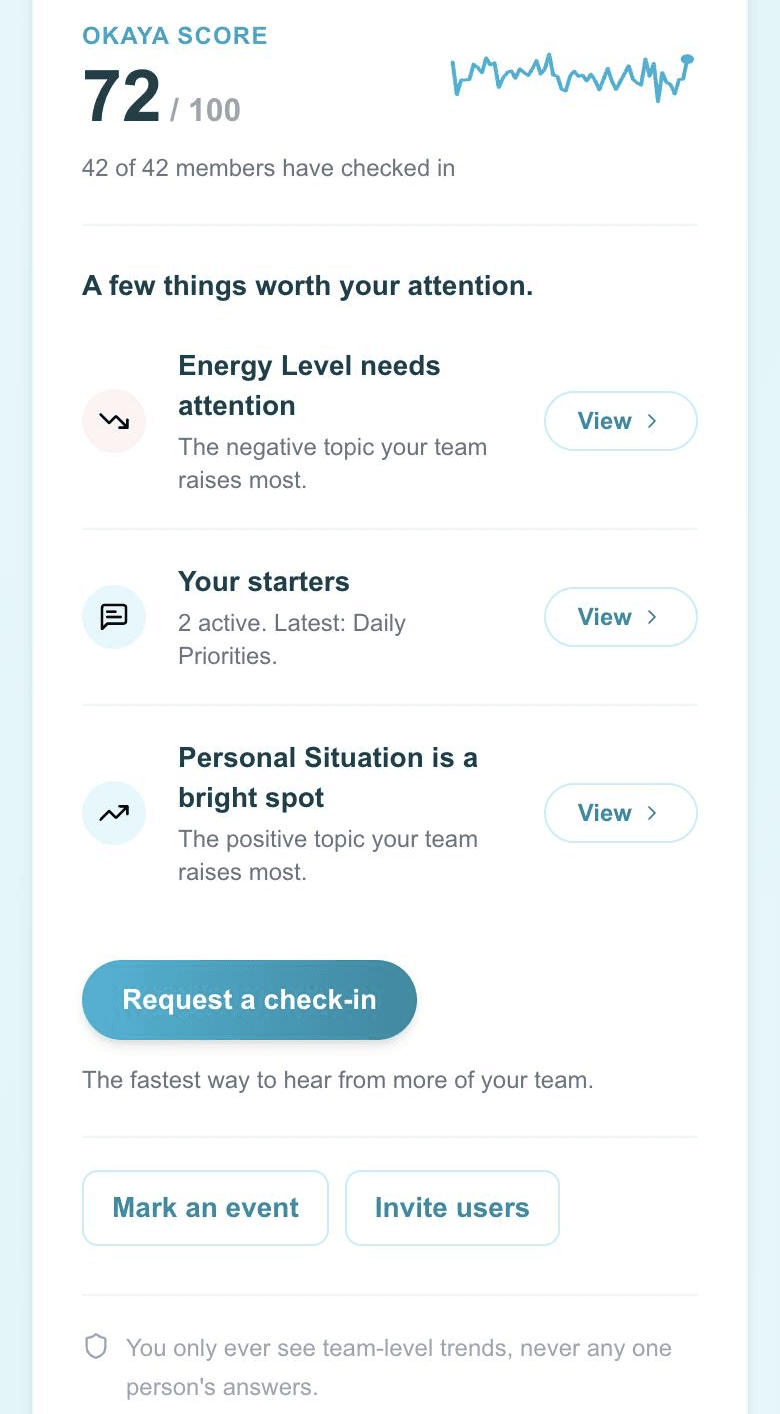
Once enough people have checked in, you see the group's readiness and the topics it raises most.
What the group view shows
Your safety systems already cover the equipment. Okaya adds the people: how the crew is really doing, in time to help. Read it next to the near-miss reports and safety observations you already review.
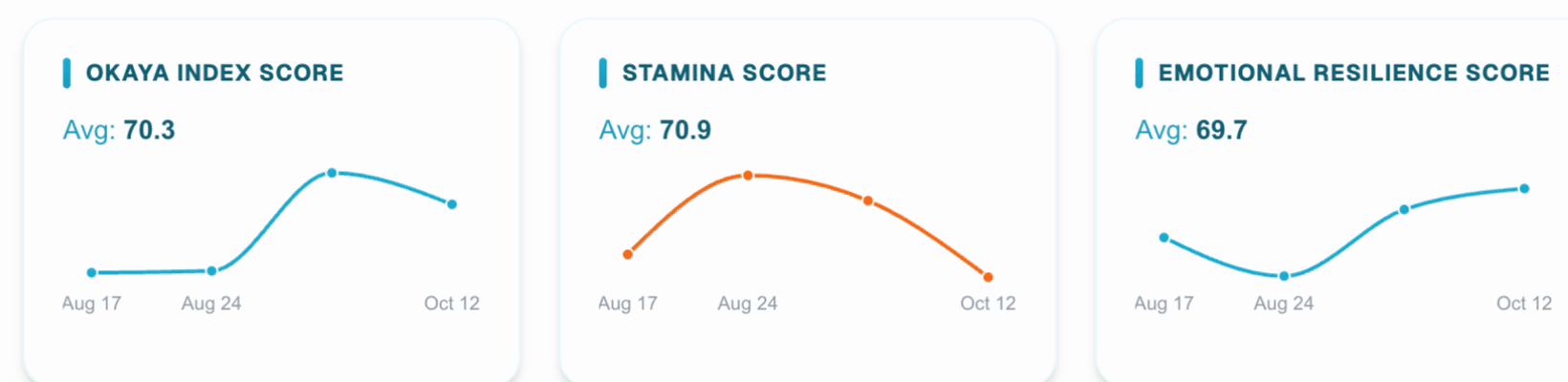
- The group's readinessand how it moves week to week, across a turnaround, an outage, a schedule change or a hard month.
- How many checked inso you know how many people the read rests on, but never who.
- What the group raises mostas topics, without anyone's words or result.
Who sees what
Operators and your union ask this first. These are the lines you can give them.
Each operator, technician or miner sees
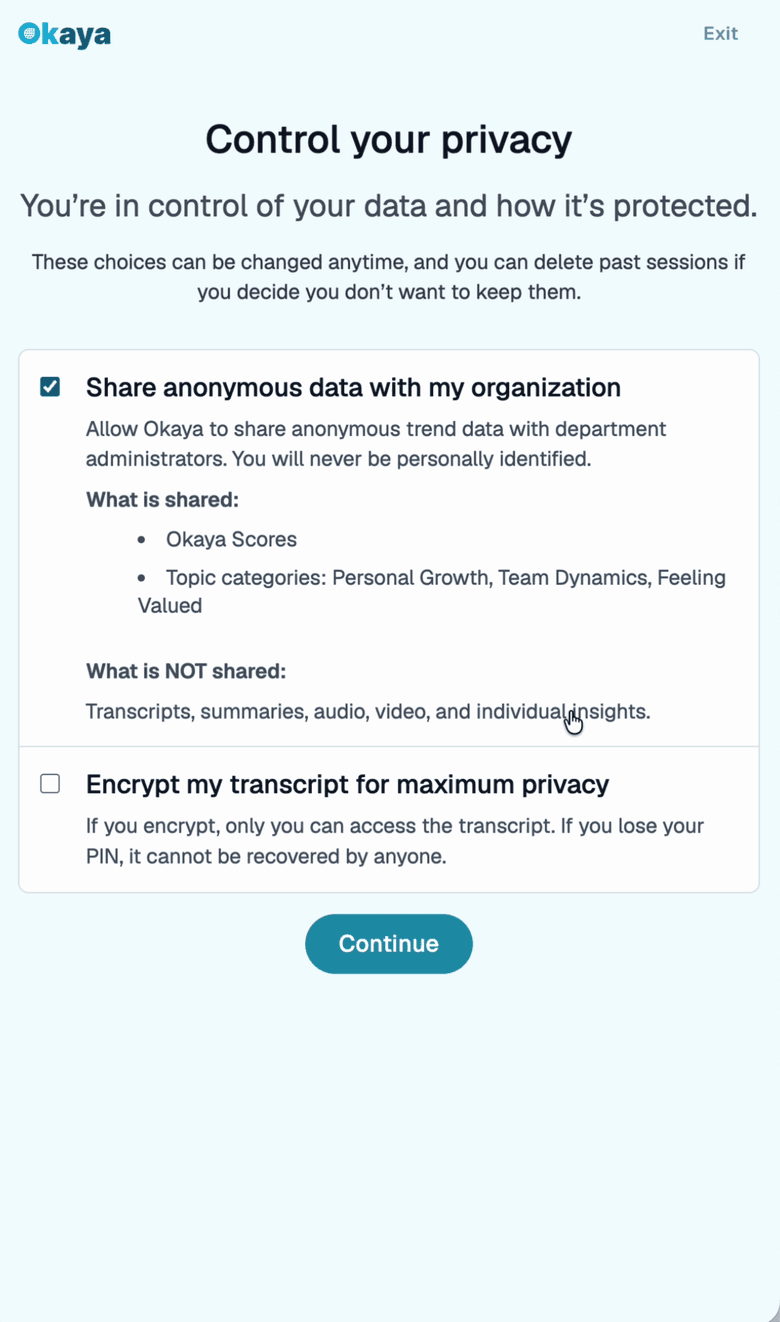
Your result is yours: you see your own score.
The video never leaves the device.
Okaya never identifies who you are from your face. There is no facial recognition.
Your safety team sees
Leadership sees anonymized, aggregated unit-level readiness only.
A leader cannot see who checked in.
Okaya is for adults 18 and over.
No link to drug testing, discipline or personnel records.
What Okaya is not
- Not a pre-shift test or a fitness-for-duty check. Nobody passes or fails.
- Not a medical exam, a diagnosis or a medical device.
- Never for discipline, scheduling or staffing decisions.
- Not a replacement for your EAP, peer support or occupational health. They stay as they are.
- Not a crisis line.
For unions and associationsWhat happens if a check-in raises a safety concernThe science
Who runs it on site
Plants, mines and utilities differ, and the roles stay much the same.
- Runs it
EHS or safety manager
Reads the group's readiness next to the safety programs the site already runs, and brings it to the safety committee.
- Signs
Plant or mine manager
Gets a group read ahead of a turnaround, an outage or a busy season, with no names and nothing to act on for one person.
- Sees it first
Your union and safety committee
Show it to them before anyone checks in.
For the plant manager and VP of operations
- A group read with no names.Your safety team gets a readiness trend for the group. Okaya is never for scheduling, staffing or discipline.
- Proof in high-consequence work.The U.S. Air Force awarded Okaya SBIR Phase I and Phase II contracts. Okaya completed Phase II with an active U.S. Air Force flying unit.
- How buying works.Start free and set up your group yourself, or talk to us and we'll set it up with your safety team. Okaya bills your organization directly. Nothing to install.
Contractors on site. They can check in too. We help you group them so each group stays above the minimum size.
A small site? Two or three people is below the minimum size for the group view. Each person can use Okaya on their own. Try it yourself
Start with your team
Set up one unit or one site first. Very small teams of two or three people can start on their own, with individual accounts.
In short
- Okaya is a short, private readiness check-in for crews in plants, mines, refineries and power plants. Each person talks with Sanora, Okaya's AI guide, for about 3 minutes. They see how today compares with their own earlier check-ins.
- Individual results stay private to the individual. Leadership sees anonymized, aggregated unit-level readiness only. A leader cannot see who checked in.
- It is not a pre-shift test, a fitness-for-duty check or a medical exam. No link to drug testing, discipline or personnel records. What happens if a check-in raises a safety concern
Questions
Can we see which operators checked in, or how one person did?
No. A leader cannot see who checked in. Individual results stay private to the individual. Leadership sees anonymized, aggregated unit-level readiness only.
Is this a pre-shift test?
No. Some people check in before a shift, some after. It is never a gate: nothing stops anyone from starting work. Okaya is not a fitness-for-duty check, and nobody passes or fails.
Is Okaya connected to drug and alcohol testing?
No link to drug testing, discipline or personnel records. Each result stays with the person.
Does anything go to OSHA, MSHA or our insurer?
No. Okaya does not report to OSHA, MSHA or an insurer. Your organization sees only the group. Our safety page, okaya.me/safety, explains what happens if a check-in raises a safety concern.
Should our union and safety committee see it first?
Yes. Show it to your union and your joint health and safety committee before anyone checks in. Our sheet for unions and associations explains who sees what, at okaya.me/unions.
How does it fit with our fatigue and safety programs?
It sits beside them. Okaya gives your safety team one more input, as group trends. It does not replace hours limits, fatigue risk assessments or anything your standards require.
Our crews are small. Does the group view still work?
Group by site or unit, not by crew, so each group stays above the minimum size for the group view. A site with two or three people is below it, so there is no team plan for it. Each person can still use Okaya on their own and keep their own result.
Can contractors on site check in?
Yes. Talk to us about how to group them, for example by contractor firm or by site, so each group stays above the minimum size.
Does Okaya use facial recognition or keep video?
No. Okaya never identifies who you are from your face. There is no facial recognition. The video never leaves the device.
Do crews need to install anything?
No. Each person checks in on their own phone or laptop in the web browser, wherever phones are allowed: at home, in the break room, before or after a shift.
Talk it through with us.
In 20 minutes we cover your site, your union and your safety program. You can try a check-in yourself before the call.